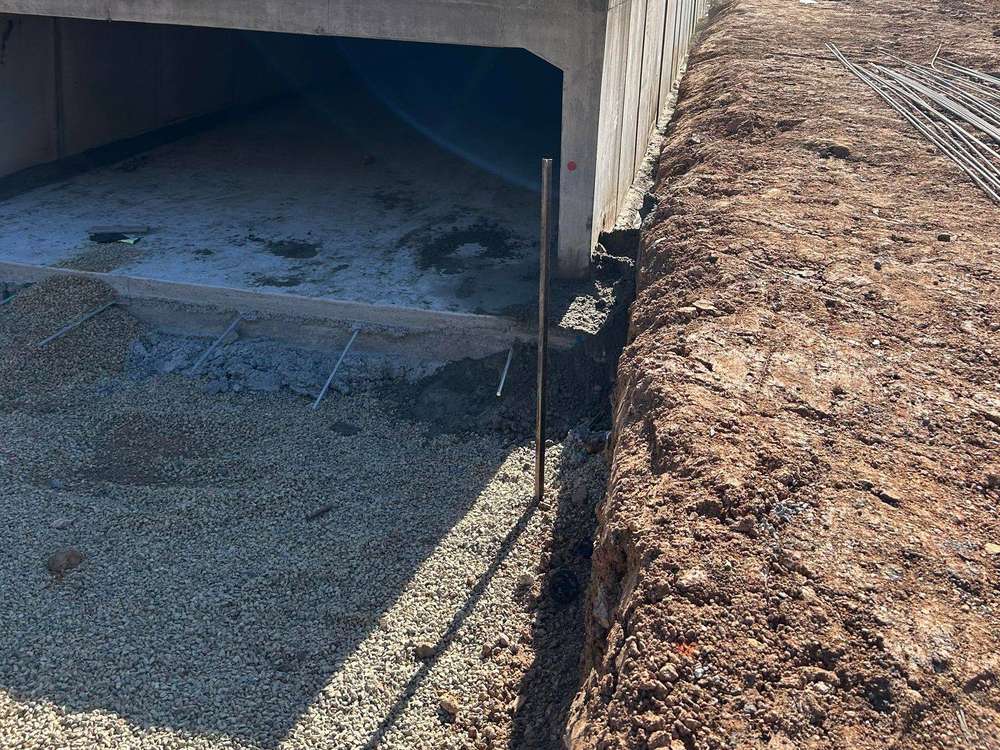
Short answer: the service people still search for as Dial Before You Dig QLD is now called Before You Dig Australia (BYDA). It is a free online referral service that sends you the plans for the pipes and cables under your block. You lodge the enquiry before any digging starts, most plans arrive within minutes, and some asset owners take up to two business days. The plans show that something is there, not exactly where, so the services still have to be located and exposed by hand before a machine goes near them.
We lodge one for every job, whether it is a single post hole or a full run of footings and trenches. The rule on our sites is short: no plans on site, no bucket in the ground. Here is what happens between your phone call and the first scoop.
What is Dial Before You Dig QLD called now?
The old name stuck, and half the trade still says “have you done your Dial Before You Dig?”. The service itself is now Before You Dig Australia, and the enquiry is lodged online. BYDA does not hold the plans. It passes your enquiry to the asset owners with networks near your dig (power, gas, water, sewer, telecommunications) and they send their plans back to you. One enquiry reaches most of them, and it costs nothing.
How does a BYDA enquiry work, step by step?
There are three steps, and none of them need an engineering degree.
- Draw the site. Log in, find the address and draw the work area on the map. The system shows which utilities are affected and how long each one expects to take.
- Describe the work. Say what you are doing and how: trenching, boring, a pool dig, a driveway cut. The asset owners use that to decide what information to send.
- Collect the responses. Each asset owner replies separately. You check them off in your enquiry summary until every one has answered.
One tip from the seat: draw the area bigger than the hole. Include the verge, the path the machine tracks in on and the spot where the spoil will sit. If the scope of the work changes after you lodge, BYDA wants a new enquiry, and “we moved the trench two metres left” is a change of scope.
How long does Dial Before You Dig take in QLD?
BYDA asks you to lodge at least one business day before the job starts. Plans are typically available within minutes, but an asset owner can take up to two business days to respond, which is where the old “allow 48 hours” rule of thumb comes from. Do not start until every affected asset owner has answered. One missing response is the one that matters.
The plans also carry a validity date. If the job slips past it, lodge again. In practice that means doing the enquiry when you accept the quote, not on the morning the excavator rolls off the float.
What do the plans tell you, and what do they leave out?
The plans tell you which services are in the area and roughly where they run. They do not pinpoint the exact location. BYDA says it plainly: never assume pipes and cables run underground in a straight line or at a set depth. Ask any operator and they will have a story about a cable sitting much shallower than it had any right to be.
Three things the plans will not give you:
- Exact position and depth. The line on the drawing is a guide, not a survey.
- Every asset owner. Most are BYDA members, not all, so the pack you receive may not show everything in the ground.
- Private services. The power feed a previous owner ran to the shed, the irrigation main, the stormwater line somebody laid on a long weekend. These are usually not on anyone’s network plan.
That is why the second step is a walk around the block. Pit lids, meter boxes, marker posts, a strip of newer concrete across the driveway and a tap in a strange spot are all clues that something runs underneath.
Who locates and potholes the services?
BYDA sets out the sequence as the 5 Ps of safe excavation: plan, prepare, pothole, protect, proceed. In plain terms:
- Plan: lodge the enquiry and have every plan in hand.
- Prepare: read the plans, look for surface clues and, where services cross the dig, bring in a skilled locator to trace them electronically.
- Pothole: physically expose the service by hand digging or hydro vacuum excavation, using the method the asset owner states on its plans.
- Protect: mark the exposed service, tell everyone on site, and put barriers up where they are needed.
- Proceed: only then does the machine start.
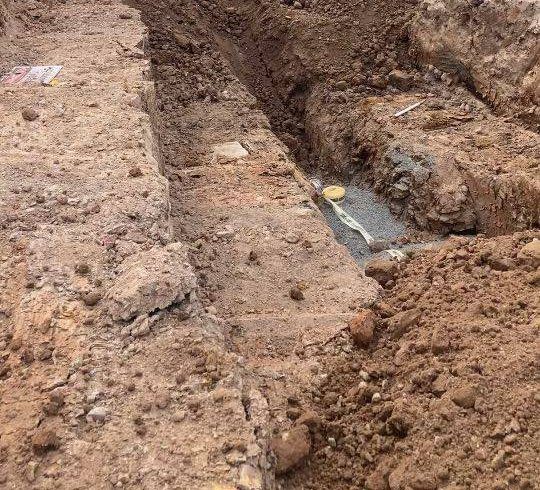
Paint marks on the grass are a good guide. A pothole is proof. Until somebody has seen the top of the pipe or conduit with their own eyes, nobody knows how deep it is, and the excavator is the most expensive way to find out. The same goes for hole boring: an auger does not know the difference between clay and a comms conduit until it is too late to matter.
Who is liable if a service gets hit?
In Queensland the duty is written into the Work Health and Safety Regulation 2011. Under section 304, the person conducting a business or undertaking who has management or control of the workplace must obtain current underground essential services information before excavation starts, have regard to it, and pass it on to whoever is doing the digging. WorkSafe Queensland summarises it on its excavations page. On a job we are running, we treat that as our job, which is why we lodge our own enquiry instead of relying on one a builder did three months ago.
The same page covers deeper work. Once a trench is 1.5 metres deep or more, the work area has to be secured against unauthorised access, and work in or near a trench deeper than 1.5 metres needs a safe work method statement.
If something does get hit, stop. If there is any threat to life, call 000. Otherwise report the damage straight to the asset owner. BYDA is not an emergency service and cannot send anyone. Who pays for the repair is then a conversation between you, the asset owner and your insurer, and it goes a great deal better when you can produce current plans, the locator’s marks and photos of your potholes.
What is the DES rule on every trench?
The same handful of things, every time, whether the job is a drainage run, a pool dig or house footings:
- A BYDA enquiry lodged for the whole work area, including the way in and the stockpile.
- Every plan back, read and on site before the machine starts.
- Services in the path of the dig located and potholed before we dig beside them with the bucket.
- If we uncover something that is not on a plan, we stop and work out what it is before anyone goes further.
It adds a little time at the front of the job. It takes far less time than a street without internet explaining to you what they think of your trench. If an old stump sits on the line of the trench, our sister company Dynamic Tree Solutions handles the stump grinding and removal first. A grinder works below ground level as well, so the plans matter there too.
Services are also one of the things that move the price of a dig, because hand work around a live service is slower than open trenching. Our guide to excavation cost per m3 covers the other drivers, and the pool excavation guide covers what to sort out before a backyard dig.
Do I need council approval as well?
A BYDA enquiry is not an approval and does not replace one. It tells you what is in the ground. Whether the excavation itself needs council approval is a separate question that depends on the size and location of the work, so check with your council or building certifier before you start. Our post on site cut and fill walks through how that side works for a house block.
Where we work
We dig footings, trenches and service runs across Brisbane’s south and south-west, including Sunnybank Hills, Drewvale and Stretton, plus Logan and Ipswich. Commercial and civil work further out is by quote.
Got a trench, footings or a set of piers to dig? Call Dynamic Earth Solutions on 0424 168 352 or send the plans through our quote form. We will lodge the BYDA enquiry, read the plans and tell you what is in the way before we give you a price.
Frequently asked questions
What does Dial Before You Dig QLD involve?
You lodge a free online enquiry with Before You Dig Australia (BYDA), draw the work area on a map and describe the job. Each asset owner with a network nearby sends you its plans. After that the services are located, exposed by hand digging or vacuum excavation, and protected before any machine digging starts.
Is Dial Before You Dig free in Queensland?
Yes. The BYDA referral service is free to use. If the plans show services across your dig, hiring a locator to trace them on the ground is a separate paid service.
How long does it take to get the plans?
Plans are typically available within minutes, but asset owners can take up to two business days. BYDA asks you to lodge at least one business day before the job starts, and you should not dig until every affected asset owner has responded.
Do the plans show exactly where the pipes and cables are?
No. The plans show that services are in the area but do not pinpoint the exact location, and you should never assume a service runs in a straight line or at a set depth. Private lines inside the property are usually not shown at all. Potholing by hand is how the real position is confirmed.
Do I need council approval as well as a BYDA enquiry?
A BYDA enquiry is not an approval. It only tells you what is in the ground. Whether the excavation needs council approval depends on the size and location of the work, so check with your council or building certifier.
What areas do you cover?
Dynamic Earth Solutions works across Brisbane's south and south-west, Logan and Ipswich. Commercial and civil work further out is by quote.