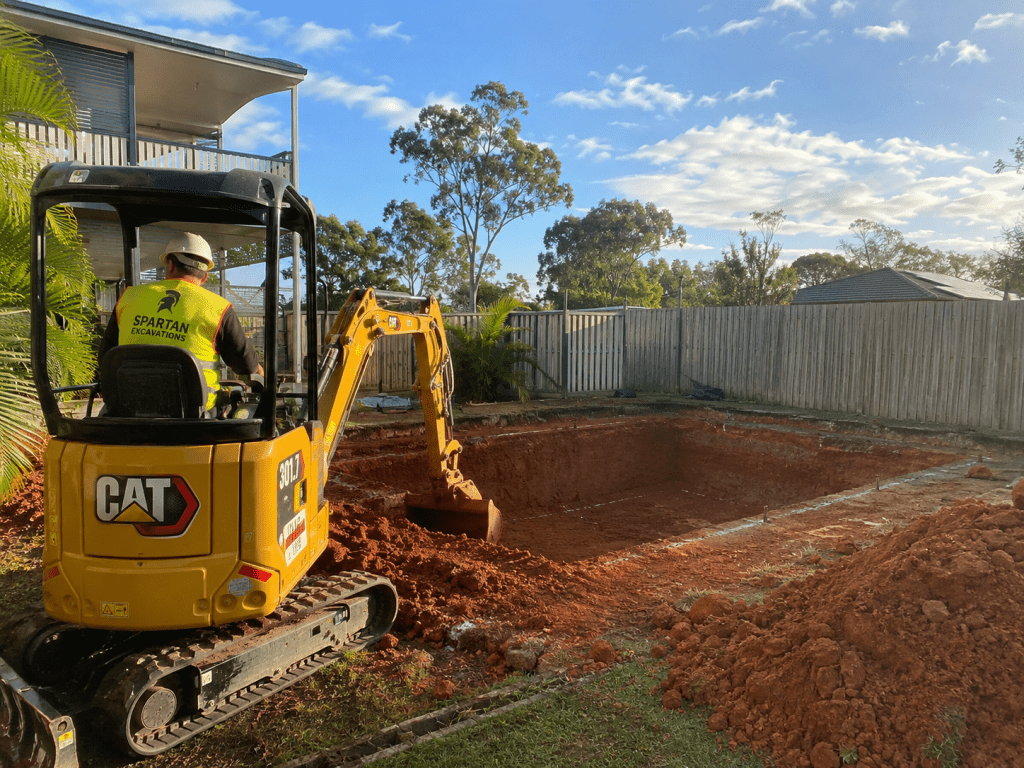
Pool Excavation in South Brisbane — Process Overview
Planning a backyard pool in South Brisbane requires understanding the complete pool excavation south brisbane process before engaging contractors. From Moorooka to Mount Gravatt, homeowners face unique site conditions that influence excavation methodology, timeline, and cost. This comprehensive guide covers every aspect of residential pool excavation, helping you make informed decisions throughout your project.
At Dynamic Earth Solutions, our indigenous-owned team has completed pool excavations across Brisbane’s southern suburbs for over a decade. We understand the geological challenges, council requirements, and coordination complexities that define successful pool projects in this region.
What Does Pool Excavation Actually Involve?
Pool excavation encompasses far more than simply digging a hole. The process involves precise engineering, careful site preparation, soil management, and coordination with multiple trades. Professional pool excavation follows a systematic approach designed to meet Australian Standards and Brisbane City Council requirements.
The fundamental stages of pool excavation include:
- Initial site assessment and survey
- Underground services location via Dial Before You Dig Australia
- Tree and vegetation assessment
- Permit acquisition and council approvals
- Site access preparation
- Excavation and soil removal
- Base preparation and compaction
- Handover to pool shell installation team
South Brisbane Geological Considerations
South Brisbane’s geology presents diverse excavation challenges. Areas like Annerley and Woolloongabba often feature heavy clay soils requiring different techniques than the sandy loam found in parts of Carindale. Understanding your specific soil type influences equipment selection, timeline, and overall project cost.
Rocky substrates occur frequently in elevated suburbs including Mount Gravatt East and Holland Park West. These conditions may require rock breaking or hydraulic hammering, adding complexity to the excavation phase. Our bulk and detailed excavations team assesses subsurface conditions during the quoting process to provide accurate cost estimates.
High water tables affect low-lying areas near creeks and waterways throughout Sunnybank, Acacia Ridge, and surrounding suburbs. Dewatering requirements during excavation add equipment and labour costs that experienced contractors factor into their quotes.
The Importance of Site-Specific Planning
Every pool excavation project in South Brisbane requires individualised planning. Cookie-cutter approaches fail when confronted with the region’s variable conditions. Professional excavation contractors conduct thorough site inspections before providing quotes, examining:
- Existing structures and setback requirements
- Underground services including water, gas, electrical, and telecommunications
- Neighbouring property considerations
- Stormwater drainage patterns
- Soil classification and stability
- Tree locations and root zones
Our building site preparation methodology ensures all factors receive proper consideration before machinery arrives on site.
Concrete vs Fibreglass Pool Excavation South Brisbane
The choice between concrete and fibreglass pools significantly impacts excavation requirements, timeline, and cost. South Brisbane homeowners must understand these differences when planning their projects. Each pool type demands specific excavation tolerances and preparation standards.
Concrete Pool Excavation Requirements
Concrete pools require excavation to the exact shape of your custom design with additional allowance for steel reinforcement and shotcrete application. This means excavating approximately 150-200mm larger than the finished pool dimensions on all sides and the base.
The excavation must provide:
- Precise depth control at multiple points
- Accurate benching for steps and ledges
- Stable walls capable of holding form until shell construction
- Proper base compaction to prevent differential settlement
Concrete pool excavations typically require longer dig times due to these precision requirements. Our team uses laser-guided systems to achieve the accuracy concrete pool builders require. The concrete and slab preparation expertise we bring ensures your pool builder receives a hole meeting exact specifications.
Fibreglass Pool Excavation Specifications
Fibreglass pools arrive as pre-manufactured shells requiring excavation matched to specific manufacturer dimensions. The hole must accommodate the shell with uniform clearance for backfill and plumbing access.
Critical fibreglass excavation considerations include:
- Oversizing the hole by 300-450mm beyond shell dimensions
- Achieving precise depth for correct pool rim height
- Creating a level, compacted base using sand or crusher dust
- Ensuring adequate crane or hiab access for shell delivery
Fibreglass pool excavations generally proceed faster than concrete alternatives but demand strict adherence to manufacturer specifications. Incorrectly sized excavations cause costly delays and potential shell damage during installation.
Comparison Table: Concrete vs Fibreglass Pool Excavation
| Factor | Concrete Pool Excavation | Fibreglass Pool Excavation |
|---|---|---|
| Excavation Time | 2-4 days depending on size | 1-2 days typically |
| Precision Required | High — custom shapes require exacting work | Moderate — follows manufacturer template |
| Overdig Allowance | 150-200mm all sides | 300-450mm all sides |
| Base Preparation | Compaction, possible rock pad | Sand/crusher dust bed (50-100mm) |
| Spoil Volume | Moderate — closer to final dimensions | Higher — larger overdig requirement |
| Equipment Needs | Multiple bucket sizes, precision GPS | Standard buckets, crane access critical |
| Weather Sensitivity | Moderate — walls must hold | Lower — shell installed quickly |
| Cost Range (excavation only) | $5,500-$15,000+ | $4,000-$10,000 |
Which Pool Type Suits South Brisbane Conditions?
South Brisbane’s variable soil conditions influence pool type selection. Heavy clay areas may favour fibreglass pools due to their flexibility and resistance to ground movement. Concrete pools excel in stable soil conditions and where custom shapes suit irregular backyard layouts.
Properties in flood-affected areas should consider additional engineering regardless of pool type. Both options require proper civil drainage installation to manage groundwater and stormwater around the pool structure.
Site Access and Backyard Constraints for Pool Excavation South Brisbane
Access limitations represent one of the most significant factors affecting pool excavation south brisbane project feasibility and cost. Many established suburbs feature narrow side passages, overhead obstructions, and challenging entry points that influence equipment selection and excavation methodology.
Minimum Access Requirements
Standard excavation equipment requires specific clearances to reach backyard sites. A typical 5-tonne excavator needs approximately:
- Minimum width: 1.8 metres clear passage
- Minimum height: 2.4 metres clearance
- Stable ground capable of supporting machine weight
- Adequate turning space to position for digging
Narrower access points may require smaller 1.5-tonne machines, extending excavation duration. In extreme cases, hand excavation of initial sections creates space for machine entry. Our team assesses access during initial site consultation, providing realistic advice about what your property can accommodate.
Common South Brisbane Access Challenges
Queenslander homes throughout Woolloongabba, Greenslopes, and Norman Park frequently feature raised construction with narrow undercroft access. These properties often require crane delivery of equipment over the house or alternative entry via neighbouring properties (with permission and appropriate agreements).
Post-war homes in suburbs like Moorooka and Yeerongpilly commonly have solid timber fencing and established gardens restricting access. Temporary fence removal and garden protection measures add coordination requirements to these projects.
Modern townhouse developments in areas such as Eight Mile Plains and Sunnybank Hills present body corporate considerations. Common property access requires written approval, and shared driveways may have load restrictions affecting truck movements for spoil removal.
Managing Tight Access Excavations
When standard access isn’t available, experienced contractors employ alternative strategies:
- Mini excavators (0.8-1.5 tonne) with reduced footprint
- Track-mounted conveyors for spoil removal through narrow passages
- Hand loading trucks parked on street frontage
- Crane lifting of equipment and materials
- Staged excavation minimising machine repositioning
These adaptations increase labour and equipment costs but make pool installation possible in otherwise inaccessible locations. Our excavation services include the specialised equipment needed for South Brisbane’s most challenging residential sites.
Overhead Obstruction Considerations
Trees, power lines, and building eaves create overhead obstructions affecting excavator operation. Energex requirements for work near power infrastructure add complexity when lines cross access routes or excavation zones.
Properties with significant tree canopy may require selective pruning or removal before excavation equipment can safely access the site. This preliminary work should be completed by tree pruning experts who understand the structural requirements of the remaining vegetation.
Tree and Root Considerations for Pool Excavation
South Brisbane’s mature tree coverage creates both aesthetic appeal and excavation challenges. Proper assessment and management of trees and root systems protects your investment, ensures regulatory compliance, and preserves valuable vegetation where possible.
The Impact of Tree Roots on Pool Excavation
Tree roots extend well beyond the visible canopy, often reaching two to three times the crown radius in search of water. Pool excavation within this root zone risks:
- Structural damage to the tree causing decline or death
- Future root intrusion into pool shell and plumbing
- Ground movement as severed roots decompose
- Legal liability if protected trees are damaged
Australian Standard AS 4970 — Protection of Trees on Development Sites establishes the framework for calculating Tree Protection Zones (TPZ) and Structural Root Zones (SRZ). This standard, available through Standards Australia, guides arborists and excavation contractors in determining safe excavation boundaries.
When Tree Removal Becomes Necessary
Some pool locations make tree retention impossible. Trees directly within the excavation footprint or with extensive root systems compromising the proposed pool site require removal before excavation commences.
In these situations, engaging professional tree removal Brisbane specialists ensures compliant, safe removal. Dynamic Tree Solutions, our sister company, coordinates directly with our excavation team to streamline scheduling and minimise overall project duration.
Trees requiring removal before pool excavation should be assessed for:
- Council protection status and permit requirements
- Neighbour notification obligations
- Stump grinding requirements for excavation clearance
- Root system extent affecting excavation boundaries
Protected Trees and Council Requirements
Brisbane City Council maintains strict regulations protecting significant trees on private property. Trees exceeding certain trunk diameter thresholds, native species, and those within specific planning overlays require approval before removal.
Understanding Brisbane City Council tree regulations before finalising pool placement prevents costly design changes and council enforcement action. Many homeowners successfully adjust pool positioning to retain valuable trees, preserving shade and property value.
When tree removal permits are required, council typically requests an arborist report assessing the tree’s health, significance, and any alternatives to removal. AQF-certified arborists in Brisbane prepare these reports, providing the technical documentation council requires for assessment.
Root Mapping and Excavation Planning
For pools positioned near significant trees, root mapping identifies the location of major structural roots before excavation begins. Non-invasive techniques including air-spading and ground-penetrating radar reveal root architecture without causing damage.
This information allows excavation contractors to plan dig sequences that minimise root severance. Where root cutting becomes unavoidable, clean cuts using appropriate tools promote healing and reduce infection risk.
Stump Removal for Pool Sites
Previously removed trees often leave stumps and significant root masses requiring additional work before excavation. Pool sites must be clear of all woody material to prevent future decomposition affecting ground stability.
Stump grinding services remove stumps to below excavation depth, allowing clean soil work without obstruction. For pool sites, grinding typically extends 600-800mm below finished ground level, ensuring no interference with pool base preparation.
Hazardous Tree Assessment
Excavation activities can destabilise nearby trees, particularly those with compromised root systems or structural defects. Trees that appear healthy may contain internal decay invisible from ground level.
Vibration from excavation equipment, changes to soil moisture levels, and root severance can trigger failure in marginally stable trees. Engaging dangerous tree removal specialists to assess trees within the zone of influence before excavation begins protects workers, property, and neighbours from falling trees or branches.
Coordinating Tree Work with Excavation
Successful pool projects in heavily vegetated South Brisbane properties require careful coordination between tree and excavation contractors. The typical sequence involves:
- Arborist inspection and report preparation
- Council permit applications for protected tree removal or pruning
- Tree removal and stump grinding once permits approved
- Site clearance and preparation for excavation
- Pool excavation with tree protection measures for retained specimens
- Ongoing tree monitoring during construction
Dynamic Earth Solutions and Dynamic Tree Solutions regularly collaborate on these coordinated projects. Learn more about our team and how our shared operational approach benefits complex residential projects.
Brisbane City Council Pool Permit Process
Understanding Brisbane City Council’s approval requirements prevents delays and ensures your pool excavation proceeds legally. The permit process involves building approval for the pool structure and potentially additional planning approvals depending on your property’s location and characteristics.
Building Approval Requirements
All swimming pools in Brisbane require building approval before construction commences. This includes excavation work, as preparatory earthworks form part of the overall pool installation. The Queensland Building and Construction Commission oversees building certification requirements.
Building approval applications typically include:
- Site plan showing pool location relative to boundaries
- Engineering specifications for the pool structure
- Hydraulic plans for plumbing connections
- Pool safety barrier (fence) design complying with current standards
- Stormwater management details
Your pool builder typically manages building approval applications, but excavation cannot legally commence until approval is granted. Homeowners should confirm approval status before scheduling excavation contractors.
Planning Approval Considerations
Standard backyard pools meeting setback requirements usually proceed under building approval alone. However, certain situations trigger additional planning assessment through Brisbane City Council planning and development:
- Properties within heritage overlays
- Flood-affected land requiring flood-conscious design
- Steep sites requiring significant cut and fill
- Pools positioned closer to boundaries than standard setbacks permit
- Properties within neighbourhood character areas
Planning approval adds assessment timeframes ranging from four to eight weeks for standard applications, potentially longer for complex proposals requiring public notification or additional studies.
Setback Requirements
Brisbane City Council establishes minimum distances between pools and property boundaries. While specific requirements vary based on zoning and overlays, typical residential setbacks include:
- Minimum 1.5 metres from side and rear boundaries
- Greater setbacks from front boundaries (typically as per house setback)
- Additional requirements for pools adjacent to waterways or protected areas
These setbacks affect excavation planning, as the actual dig extends beyond the pool shell to accommodate construction access and backfill space.
Excavation-Specific Permit Considerations
Deep excavations may trigger separate requirements under WorkSafe Queensland excavation guidelines. Excavations exceeding 1.5 metres depth require specific safety measures including shoring or battering of walls to prevent collapse.
Contractors must also obtain permits for any works affecting council infrastructure, including:
- Crossing footpaths or nature strips with heavy equipment
- Temporary closure of street parking for truck loading
- Discharge of groundwater to stormwater systems
Stormwater and Drainage Compliance
Pool construction affects site drainage patterns. Council requires demonstration that the completed pool installation maintains or improves stormwater management. This includes consideration of:
- Pool overflow routing to appropriate disposal points
- Filter backwash water management
- Changes to overland flow paths from pool surrounds
- Compliance with Brisbane City Council stormwater drainage requirements
Our civil drainage installation expertise ensures excavation work incorporates proper drainage provisions from the outset.
Pool Excavation Cost in South Brisbane
Understanding the cost components of pool excavation south brisbane projects helps homeowners budget accurately and evaluate quotes effectively. Excavation typically represents 10-20% of total pool installation cost, varying significantly based on site conditions and pool specifications.
For what actually moves the price per cubic metre on any Brisbane dig, access, ground, haulage and tip fees, read our guide to excavation cost per m3 in Brisbane.
Cost Factors Affecting Pool Excavation
Multiple variables influence excavation pricing:
- Pool size: Larger pools require more digging time and spoil removal
- Pool depth: Deeper pools increase excavation volume and complexity
- Soil conditions: Rock, heavy clay, or high water tables add cost
- Site access: Restricted access requires smaller equipment and longer duration
- Spoil disposal: Distance to tip and disposal fees vary
- Underground services: Working around utilities requires careful excavation
Pool Excavation Cost Breakdown
| Cost Component | Typical Range (South Brisbane) | Notes |
|---|---|---|
| Mobilisation/demobilisation | $400-$800 | Transport of equipment to and from site |
| Machine hire (5T excavator) | $180-$250/hour | Including operator |
| Bobcat/skid steer | $120-$180/hour | Including operator |
| Spoil removal | $80-$120/m³ | Including truck hire and disposal |
| Rock breaking | $150-$300/hour | Hydraulic hammer attachment |
| Dewatering | $200-$500/day | Pump hire and operation |
| Dial Before You Dig | Free-$50 | Essential pre-excavation service |
| Base preparation (crusher dust) | $30-$50/m² | For fibreglass pool installation |
Typical Total Excavation Costs by Pool Size
Based on South Brisbane conditions with average access and soil:
- Small pool (up to 25m³): $4,000-$6,500
- Medium pool (25-40m³): $6,500-$9,500
- Large pool (40-60m³): $9,500-$14,000
- Extra large pool (60m³+): $14,000-$20,000+
Rock conditions can add $3,000-$10,000 or more depending on extent and hardness. Poor access adding multiple days to the project timeline may increase costs by $2,000-$5,000.
Hidden Costs to Consider
Beyond direct excavation costs, homeowners should budget for related expenses:
- Tree removal: $800-$5,000+ depending on size and access
- Stump grinding: $200-$800 per stump
- Fence removal and reinstatement: $500-$2,500
- Garden restoration: $500-$3,000
- Temporary fencing for safety: $400-$800
When trees require removal before pool excavation, obtaining quotes from professional tree removal Brisbane specialists provides accurate budgeting figures. Combining tree removal with excavation under coordinated contractors often improves efficiency and reduces overall cost.
Getting Accurate Quotes
Reliable excavation quotes require site inspection. Contractors providing phone quotes without seeing the property cannot accurately assess conditions affecting cost. When seeking quotes:
- Provide pool plans showing dimensions and depth
- Identify known underground services
- Point out any access restrictions
- Mention previous tree removal if stumps remain
- Ask about inclusions and exclusions in the quote
Contact our team for a detailed site assessment and transparent quote covering all aspects of your pool excavation project.
Timeline From Quote to Completion for Pool Excavation South Brisbane
Realistic timeline expectations help homeowners coordinate trades and plan their pool installation. The excavation phase itself is relatively quick, but the overall process from initial enquiry to completed dig spans several weeks in most cases.
Pre-Excavation Timeline
Before excavation can commence, several preparatory steps must occur:
- Initial enquiry and site inspection: 1-2 weeks to schedule and complete
- Quote preparation: 2-5 business days after inspection
- Building approval: 2-6 weeks depending on certifier workload
- Dial Before You Dig request: 2-10 business days for all responses
- Tree removal if required: 1-4 weeks including permit timeframes
- Site preparation and access work: 1-2 days
Planning approval, where required, adds significant time to the pre-excavation phase. Properties within overlays may require 8-12 weeks for council assessment.
Excavation Duration
Actual excavation duration depends on pool size, soil conditions, and access:
- Standard fibreglass pool (good access, normal soil): 1-2 days
- Standard concrete pool (good access, normal soil): 2-3 days
- Large or deep pool: 3-5 days
- Restricted access (mini excavator): Add 1-2 days
- Rock conditions: Add 1-3 days
- High water table requiring dewatering: Add 1-2 days
Post-Excavation to Pool Shell
After excavation completion, timing depends on pool type:
Fibreglass pools: Shell installation can occur within days of excavation completion, weather permitting. The hole should remain exposed for minimal time to prevent wall collapse or flooding.
Concrete pools: Steel fixing follows excavation immediately, typically taking 2-5 days. Shotcrete or concrete spray application then proceeds, requiring the excavation to remain stable throughout.
Sample Timeline: Standard Pool Project
| Phase | Duration | Cumulative Time |
|---|---|---|
| Initial enquiry to quote acceptance | 2-3 weeks | Week 3 |
| Building approval | 3-4 weeks | Week 7 |
| Tree removal (if required) | 1-2 weeks | Week 9 |
| Excavation scheduling | 1-3 weeks | Week 12 |
| Excavation works | 2-3 days | Week 12-13 |
| Pool shell installation | 1-2 weeks | Week 14-15 |
This timeline assumes no significant delays from weather, permit complications, or unforeseen site conditions. Our pool excavation specialists provide realistic timeframes based on current scheduling and known site factors.
Weather Considerations in South Brisbane
Southeast Queensland’s climate affects excavation scheduling. Key weather considerations include:
- Summer wet season (November-March): Heavy rainfall can delay excavation and cause completed excavations to flood or collapse
- Storm season: Afternoon thunderstorms may interrupt work
- Dry periods: Ideal for excavation but may require dust suppression
- Extreme heat: Work hour restrictions may apply under workplace safety requirements
Experienced contractors build weather contingency into schedules and communicate promptly when conditions require rescheduling.
Working with Pool Builders During Excavation
Successful pool projects require coordinated effort between excavation contractors and pool builders. Clear communication and defined responsibilities prevent disputes and ensure quality outcomes.
Division of Responsibilities
Typically, responsibilities divide as follows:
Pool builder responsibilities:
- Providing accurate excavation specifications
- Obtaining building approval including engineering
- Specifying base preparation requirements
- Scheduling shell installation promptly after excavation
- Managing all post-excavation construction
Excavation contractor responsibilities:
- Digging to specified dimensions and tolerances
- Removing spoil from site
- Preparing base to specified standards
- Protecting existing services and structures
- Leaving site ready for shell installation
Communication Protocols
Effective coordination requires clear communication between all parties. Before excavation commences, confirm:
- Exact excavation dimensions including any overdig
- Depth tolerance requirements
- Base preparation specifications
- Any in-ground services the pool builder needs exposed
- Timeline for shell installation after excavation
- Contingency plans for unexpected conditions
Our team maintains direct communication with pool builders throughout excavation, addressing questions immediately and documenting work completion with photos for handover records.
Common Coordination Issues
Problems arise when communication breaks down. Common issues include:
- Specification changes mid-excavation: Design changes after digging starts create additional costs and delays
- Scheduling gaps: Excavations left open too long risk collapse, flooding, or safety incidents
- Tolerance disputes: Unclear specifications lead to disagreements about work quality
- Site condition surprises: Rock or services encountered during excavation require prompt decisions
Engaging experienced contractors familiar with pool excavation minimises these risks. Our complete civil services experience means we understand pool builder requirements and construction sequencing.
Direct Engagement vs Builder Subcontract
Homeowners can either engage excavation contractors directly or have their pool builder manage excavation as part of the total project. Each approach has merits:
Direct engagement advantages:
- Direct control over excavation contractor selection
- Clear pricing without builder markup
- Direct communication about site conditions
Builder-managed excavation advantages:
- Single point of responsibility
- Builder coordinates all scheduling
- Simplified contract management
Many homeowners choose direct engagement for excavation while having their pool builder manage all subsequent works. This approach provides cost transparency while maintaining clear construction sequence management.
Post-Excavation Site Cleanup
Professional pool excavation includes appropriate site cleanup, leaving your property ready for the next construction phase. Understanding what’s included and what constitutes additional work helps set expectations.
Standard Cleanup Inclusions
Typical post-excavation cleanup includes:
- Removal of all excavated spoil from site
- Basic spreading of minor spillage around work areas
- Clearing access paths of tracked material
- Removing any temporary protection measures
- Basic levelling of disturbed areas around excavation
The excavation site immediately following dig completion shows exposed soil, machine tracks, and potentially muddy conditions depending on weather. This is normal and doesn’t indicate incomplete work.
Additional Works Beyond Standard Cleanup
Some site restoration falls outside standard excavation scope:
- Full site levelling: Comprehensive site levelling and grading beyond immediate excavation areas
- Topsoil supply and spread: Replacing topsoil stripped during excavation
- Turf reinstatement: Laying new grass in damaged areas
- Fence reconstruction: Rebuilding fences removed for access
- Garden restoration: Replanting disturbed garden beds
Discuss these items during quoting to understand what’s included and what requires separate arrangement.
Spoil Removal and Disposal
Pool excavation generates significant spoil volumes. A medium-sized pool (35m³ excavation) produces approximately 50-60 cubic metres of loose soil requiring removal — typically three to four truck loads.
Disposal options include:
- Licensed landfill: Standard option for mixed soil
- Clean fill sites: Lower cost for uncontaminated material
- Reuse on site: Where level changes or fill areas exist
- Topsoil sale: Quality topsoil may have value offsetting disposal costs
Contaminated soil from industrial or commercial site histories requires special handling and disposal, adding significant cost. Residential properties rarely present contamination issues, but any concerns should be raised during initial assessment.
Erosion Control
Exposed soil following excavation is vulnerable to erosion, particularly during rain. Depending on timing before pool installation, erosion control measures may include:
- Silt fencing around disturbed areas
- Temporary grass seeding of stockpiles
- Mulch application to access paths
- Drainage diversions preventing water entering excavation
Brisbane’s intense summer rainfall makes erosion control particularly important for excavations left open more than a few days.
Site Security
An open excavation presents significant safety hazards. Homeowners bear responsibility for securing the site between excavation completion and pool construction. Requirements include:
- Temporary fencing around the excavation perimeter
- Warning signage indicating hazard
- Prevention of child and animal access
- Neighbour notification of hazards
Pool builders typically coordinate prompt shell installation to minimise open excavation duration. Any unexpected delays should trigger immediate discussion about site security measures.
Frequently Asked Questions About Pool Excavation South Brisbane
How long does pool excavation take in South Brisbane?
Standard pool excavation takes one to three days for the actual digging work, depending on pool size, soil conditions, and site access. Fibreglass pool excavations typically complete faster than concrete pools due to less precise shaping requirements. However, the total timeline from initial enquiry to completed excavation spans six to twelve weeks when accounting for site assessment, quoting, permit approvals, and scheduling. Rock conditions or restricted access can extend excavation duration by one to three additional days. Summer weather with afternoon storms may also cause delays. We recommend allowing contingency in your overall pool construction schedule for unexpected conditions.
What equipment is used for residential pool excavation?
Residential pool excavation typically uses a five to eight-tonne excavator as the primary digging machine, selected for its balance of power and manoeuvrability in suburban backyards. This size handles most soil conditions efficiently while fitting through standard side access gates. Attachments include digging buckets of various widths, rock breakers for hard ground, and ripper attachments for compacted clay. A bobcat or skid steer loader handles spoil loading into trucks and assists with site cleanup. Mini excavators weighing under two tonnes are used when access restricts larger machines. Tip trucks ranging from six to twelve cubic metre capacity remove spoil to disposal sites.
Do I need council approval before pool excavation begins?
Yes, pool excavation requires building approval before any ground disturbance commences. In Brisbane, all swimming pools must receive certification through a private building certifier or council before construction starts, including the excavation phase. Additionally, if your property falls within certain planning overlays — including flood zones, character areas, or heritage precincts — you may require planning approval through Brisbane City Council planning and development. Tree removal on the excavation site may also trigger separate approval requirements. Your pool builder typically manages building approval applications, but as the property owner, you remain responsible for ensuring all approvals are in place before authorising excavation to proceed.
What happens if rock is encountered during pool excavation?
Encountering rock during pool excavation triggers a variation to the original quote in most contracts. Reputable excavation contractors specify their quote assumptions regarding ground conditions and outline variation processes for unexpected rock. When rock appears, the excavator operator assesses the extent and hardness, then contacts the project manager to discuss options. Rock removal methods include hydraulic hammering using a breaker attachment, which adds $150-$300 per hour to project costs. Extensive rock may require assessment by a geotechnical engineer to determine the best approach. Some pools require design modifications to accommodate rock locations, particularly for depth adjustments. Always confirm rock variation terms before signing excavation contracts.
Can trees near the pool site be retained during excavation?
Trees near pool excavation sites can often be retained with appropriate protection measures and careful excavation techniques. Australian Standard AS 4970 provides guidance for calculating Tree Protection Zones based on trunk diameter, establishing the minimum area requiring protection during construction. Where excavation must occur within these zones, methods including hand excavation near roots, root pruning by qualified arborists, and protective barriers around retained trees minimise damage. However, trees directly within the excavation footprint or with extensive root systems compromising pool placement typically require removal. Engaging AQF-certified arborists in Brisbane for pre-excavation assessment identifies which trees can be safely retained and any protection measures required.
How is excavated soil disposed of from pool sites?
Excavated soil from residential pool sites is removed by tip truck to licensed disposal facilities. A typical medium-sized pool excavation generates 40-60 cubic metres of loose spoil requiring three to four truck loads for removal. Disposal destinations include licensed landfills accepting clean fill, construction recycling facilities, and approved fill sites. Disposal costs vary based on material type and distance to facilities — South Brisbane projects typically access facilities in the southern corridor including Willawong and Larapinta areas. Clean clay and soil command lower disposal fees than material containing rock, organic matter, or any contamination. Some excavation contractors include disposal in their quotes while others itemise spoil removal separately — confirm this during the quoting process.
What preparation should homeowners complete before excavation day?
Homeowners should complete several preparations before excavation equipment arrives. Clear the access path of vehicles, garden furniture, pot plants, and any items that could obstruct machine movement. Arrange temporary relocation for pets during the excavation period — the noise and activity causes stress and creates safety risks. Notify neighbours about expected noise and truck movements, particularly if parking may be affected. Remove any valuable plants from the immediate work area that you wish to preserve. Locate your water meter and any outdoor service points, marking them clearly if not obviously visible. Confirm building approval documentation is available if the excavation contractor requests verification. Finally, ensure someone responsible remains available by phone throughout the excavation day to authorise any decisions required due to unexpected conditions.
Why might pool excavation costs vary significantly between quotes?
Pool excavation quotes vary due to different assumptions about site conditions, inclusions, and contractor overheads. Key variables affecting pricing include: soil type assumptions (clay vs sand vs rock), spoil disposal distance and tip fees, equipment selection based on access assessment, labour rates and crew size, insurance and licensing costs, and allowances for unexpected conditions. Some contractors quote bare minimum scope with extensive variation clauses, while others include comprehensive allowances for typical conditions. When comparing quotes, verify inclusions match — particularly spoil removal, base preparation, and cleanup. The cheapest quote may become expensive if variations apply. Established contractors like Dynamic Earth Solutions provide detailed quotes specifying assumptions and variation triggers, enabling accurate cost comparison.
What’s the best time of year for pool excavation in South Brisbane?
The optimal period for pool excavation in South Brisbane runs from April through October, avoiding the wettest summer months. Autumn and winter provide more predictable weather with lower rainfall probability, reducing delays and complications from wet ground conditions. Dry soil excavates more efficiently and walls remain stable longer during the gap between excavation and pool installation. However, this period represents peak demand for excavation contractors, so earlier booking is essential. Summer excavation remains possible but requires acceptance of weather-related delays and additional erosion control measures. The critical factor is minimising the time between excavation completion and pool shell installation — regardless of season, this gap should be as short as possible to prevent excavation damage from weather events.
Can pool excavation damage underground services?
Underground services present real risks during pool excavation if not properly located beforehand. Water pipes, gas mains, electrical cables, telecommunications conduits, and sewer lines all potentially cross residential properties. Damage to these services causes injury, property damage, service disruption, and significant repair costs for which the responsible party may be liable. Dial Before You Dig Australia provides free service location information that all excavation projects must obtain before digging. However, this information shows approximate locations only — actual cable and pipe positions may vary from plans. We set out the whole sequence in what happens before we dig. Professional excavation contractors use additional methods including ground-penetrating radar, cable locators, and careful hand excavation near identified services. Despite precautions, unknown private services occasionally exist, particularly on older properties with modification histories.
Do I need the excavation contractor on site for the full dig duration?
Professional excavation contractors manage their own work without requiring homeowner supervision throughout the process. At project commencement, the contractor confirms excavation boundaries, discusses access, and establishes communication protocols for any questions or decisions required. The experienced operator then proceeds with excavation while the homeowner continues normal activities. However, having a responsible contact available by phone throughout the excavation period is essential — decisions about unexpected rock, service locations, or boundary clarifications may require prompt input. Most excavation days don’t require any homeowner intervention, but availability for quick responses prevents delays. At completion, the contractor walks through the finished excavation with the homeowner, confirming specifications and documenting any variations for pool builder coordination.
What tree work might be needed before pool excavation?
Several tree-related services may be required before pool excavation can proceed safely and legally. Trees directly within the excavation footprint require complete removal, including stump grinding below excavation depth. Trees adjacent to the excavation zone may need root pruning or removal depending on species, size, and root system extent. Overhanging branches restricting excavator operation may require trimming for safe equipment access. Where protected trees require removal, council permits must be obtained first — potentially requiring consulting arborist reports documenting tree condition and removal justification. Dead or hazardous trees within the work zone should be removed before machinery arrives on site. Dynamic Tree Solutions coordinates with our excavation team to complete all necessary tree work efficiently before ground disturbance commences.
How do I compare excavation quotes effectively?
Effective quote comparison requires examining scope, assumptions, and terms rather than simply comparing totals. Request that each contractor itemise their quote showing: mobilisation costs, hourly or fixed excavation price, spoil removal and disposal, base preparation, and cleanup inclusions. Identify each quote’s assumptions about soil type, rock presence, and access conditions. Review variation clauses specifying how unexpected rock, services, or other conditions are priced. Confirm insurance coverage and licensing compliance, including verification with the Queensland Building and Construction Commission where applicable. Ask for references from recent pool excavation projects in your area. The most valuable quote clearly communicates what’s included, when variations apply, and provides certainty about final cost within stated assumptions. This approach prevents surprises when the invoice arrives.
For further questions about pool excavation requirements specific to your South Brisbane property, our team provides obligation-free consultations and site assessments. We believe informed homeowners make better decisions and achieve superior project outcomes.
Ready to Start Your Pool Excavation Project?
Transforming your backyard with a new swimming pool begins with professional excavation by contractors who understand South Brisbane’s unique conditions. Dynamic Earth Solutions brings indigenous-owned expertise, modern equipment, and collaborative relationships with tree specialists and pool builders to every residential project.
Our safety and compliance standards meet the highest industry requirements, and our Supply Nation registration demonstrates our commitment to indigenous business excellence. Whether you need complete excavation services or coordination with our sister company for land clearing Brisbane requirements, we deliver comprehensive solutions.
Contact our team today to discuss your pool excavation project. We provide detailed site assessments, transparent quotes, and professional execution throughout South Brisbane and SEQ.
Explore more civil construction insights on our blog or review frequently asked questions about our complete service range. Discover our indigenous-owned story and why clients throughout Queensland trust Dynamic Earth Solutions for their most demanding excavation projects.