Short answer: if you disturb soil on a Brisbane block, you are responsible for keeping that soil on the block. Erosion and sediment control QLD rules come from the Environmental Protection Act 1994, and Brisbane City Council enforces them on everything from a house pad in Forest Lake to a subdivision in Pallara. The basics are a silt fence on the low side, a rock pad at the gate, protected stormwater inlets, stockpiles kept away from the kerb, and bare dirt covered as soon as you are done with it.
We put erosion and sediment control in on every site preparation job before the first bucket goes in, because the alternative is a council officer standing in your driveway after a storm, and that conversation never ends with “no worries”.
What does erosion and sediment control QLD actually mean on a building site?
Erosion is the soil moving. Sediment is where it ends up: the gutter, the stormwater pit, the neighbour’s lawn, and eventually Oxley Creek or the Brisbane River. Control means you stop it at the source rather than cleaning it up afterwards.
Council’s position is simple. Under the Environmental Protection Act a person must not cause environmental harm, and that specifically includes putting earth, concrete or building waste in roadside gutters, stormwater drains or waterways, or leaving it where it could reasonably be expected to wash into them. A spoil heap on the footpath in October counts. So does a wheel track of mud down the road. The council page on erosion and sediment control spells out who needs what, and it says plainly that failing to do it can bring fines, prosecution and court penalties. It does not publish a dollar figure, so we will not invent one.
Do I need an ESC plan, or just a silt fence?
It depends on the size of the job and the risk of the site. For a development application or an operational works application that involves cut or fill, Brisbane City Council wants an Erosion Hazard Assessment lodged with the application. That assessment rates the site low, medium or high:
- Low risk: no further ESC paperwork. You still have to control sediment, you just do not have to certify a plan.
- Medium risk: an ESC design certificate, signed off by a Certified Professional in Erosion and Sediment Control (CPESC) or an RPEQ engineer.
- High risk: the plan is prepared by a CPESC or RPEQ, certified by a CPESC, and you also need an inspection certificate kept on site until every bit of exposed soil is permanently stabilised.
Medium and high-risk sites also need a pre-start meeting with a council ESC officer before any dirt moves, and the design certificate has to be in at least 10 days before that meeting. Requests can take up to 10 business days to process, so if your builder is talking about starting next week and nobody has booked the pre-start, you are not starting next week.
For a single house lot, your approval conditions and your building certifier will tell you what is required. In practice that is almost always a certified plan or at minimum a drawn-up set of controls. Either way the physical measures are the same ones listed below, and council can act on sediment leaving any site, plan or no plan.
What do the controls look like on the ground?
Council points everyone to the International Erosion Control Association best practice document, and the Brisbane City Plan erosion and sediment control code sits over the top of it. Stripped of the jargon, a well-run small site in Brisbane’s south has these:
- Silt fence on the low side. Geotextile fabric trenched in and stapled to stakes, run along the downhill boundary and wherever water leaves the block. Lying on the surface held down with a few bricks does nothing. It has to be dug in, or the water goes underneath and takes the dirt with it.
- Stabilised site entry. A pad of coarse rock at the crossover so trucks and the excavator shake the clay off their tracks before they hit the bitumen. One exit point, not three.
- Protected inlets. Sediment socks or filter bags on the kerb inlets downhill of the site. Low cost, and it is the first thing a council officer looks at.
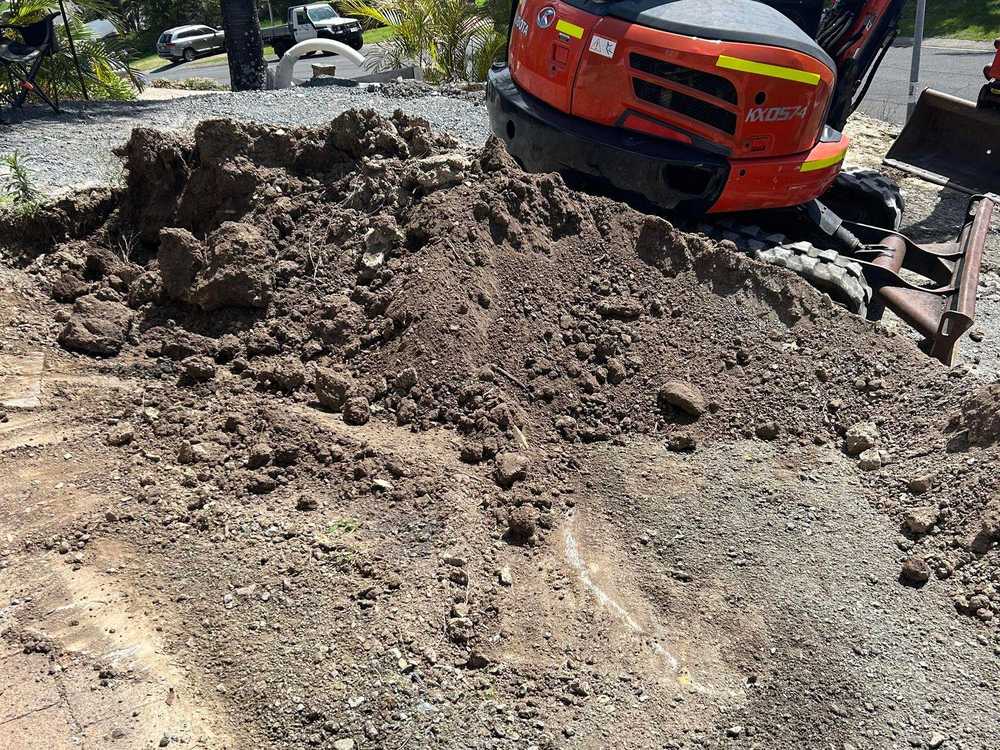
- Stockpiles in the right place. Topsoil and spoil kept away from the kerb and the drainage line, with a silt fence or a bund on the low side. If the pile is staying more than a week or so, cover it or seed it.
- Divert clean water around the work. A shallow catch drain above the cut keeps upslope runoff off your disturbed area so you are only managing the water that lands on the site.
- Stabilise as you go. Finish a batter, mulch it or turf it. The longer bare clay sits in a Brisbane summer, the more of it ends up in the gutter.
- Keep the plan on site. Council expects the ESC plan and design certificate to be available for inspection at all times, not in someone’s inbox.
Why does it matter more in SEQ than down south?
Because of what the sky does between November and March. A Brisbane storm can drop a month of southern rain in an afternoon, and much of our southside clay turns to slurry the moment it is wet. On a site in Calamvale or Parkinson with a bit of fall, an unprotected pad can lose a surprising amount of topsoil in one event, and that soil is on the road for the neighbours and the council to see. The flip side is that stabilising early works well here: turf and seed take fast in the warm months, so a batter covered in week one is holding itself by week three.
Sites that have been cleared add another layer. When the block is being opened up from scrub, we bring in the Dynamic Tree Solutions clearing crew first, and the sediment controls go in before the mulcher leaves, because a freshly cleared slope with no roots holding it is exactly the kind of site that moves.
What does Dynamic Earth Solutions install, and when?
On our own site cut and levelling and pad jobs we install the standard controls as the first task on day one: silt fence trenched in on the low boundary, rock entry pad, inlet protection on the nearest downhill pits, and the stockpile location agreed with the builder before we strip. If the job has a certified ESC plan we build to the plan, photograph it, and keep the paperwork in the ute for the council officer. If the plan calls for sediment basins, rock check dams or diversion drains, the excavator is already on site, so they are dug while we are there rather than priced as an extra later.
What drives the cost is the length of fence, the fall across the block, how long the site will sit open, and whether drainage works are being done at the same time. We do not publish a per-metre rate because no two blocks need the same amount, but it is a small line against the earthworks and a very small line against a clean-up notice. For a sense of how the whole pad budget fits together, our site preparation cost guide walks through it.
Common ways people get it wrong
Fence on the wrong side of the block, so the water never meets it. Fence not trenched in. One fence for a site that drains two ways. Spoil dumped on the verge “just for the weekend” before a Friday storm. No rock at the gate, and a trail of clay down the street that the council officer follows straight to the site. Stockpile left bare for two months. Washing the excavator tracks into the gutter. None of these are exotic. All of them are visible from the street, which is how most complaints start.
Where we work
We handle site preparation, levelling and the sediment controls that go with it across Brisbane’s south and south-west, including Forest Lake, Pallara, Calamvale and Parkinson, plus Logan and Ipswich. Logan and Ipswich councils run their own erosion and sediment control requirements, so check the conditions on your approval if the block is outside Brisbane City.
Need a pad cut with the sediment controls done properly from day one? Call Dynamic Earth Solutions on 0424 168 352 or send the plans through our quote form and we will price the earthworks and the ESC together.
Frequently asked questions
What does erosion and sediment control qld involve on a house block?
Keeping disturbed soil on the site. On a typical Brisbane house block that means a silt fence trenched in along the low boundary, a rock pad at the site entry, filter socks on the downhill stormwater inlets, stockpiles kept away from the kerb and covered if they sit for long, and bare soil mulched or turfed as soon as each area is finished.
Do I need council approval or a certified ESC plan?
Brisbane City Council requires an Erosion Hazard Assessment with development and operational works applications that disturb soil. Low-risk sites need no further ESC paperwork; medium-risk sites need a certified ESC design certificate; high-risk sites need the design certificate plus an inspection certificate and a pre-start meeting with council. For a single house, your approval conditions and building certifier set the requirement. Whatever the paperwork, letting sediment leave the site is an offence under the Environmental Protection Act.
How long does it take to install sediment controls?
On a standard residential block the silt fence, rock entry pad and inlet protection go in on the first morning, before stripping starts. Larger sites with sediment basins or diversion drains take longer and are built to the certified plan while the excavator is on site. The 10-day lead time for lodging a design certificate before a council pre-start meeting is usually the longer wait.
What happens if sediment leaves my site?
Brisbane City Council can investigate a report, require the site to be fixed and cleaned up, and pursue fines, prosecution or court penalties under the Environmental Protection Act 1994. Council does not publish a fixed dollar amount on its erosion and sediment control page, so treat any figure you are quoted with caution and read the council page yourself.
Who is responsible, the owner, the builder or the excavation contractor?
The person who causes the environmental harm, which in practice can be any of them. On our jobs we install and maintain the controls while we are on site and hand over with photos. After we leave, keeping the fence standing and the entry pad topped up falls to whoever controls the site, usually the builder.
What areas do you cover?
Brisbane's south and south-west, Logan and Ipswich for residential and commercial site preparation. Commercial and civil work further out is taken on by quote.