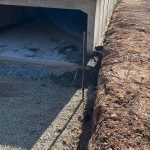
Short answer: pool excavation cost in Brisbane is set by four things: how a machine gets into the yard, what the ground is made of, how much spoil has to leave and where it goes, and whether water turns up in the hole. Two pools of the same size on the same street can cost very different amounts because of those four. We do not publish a rate card on this post, but by the end of it you will know what the quote is made of and what to send us to get a real number.
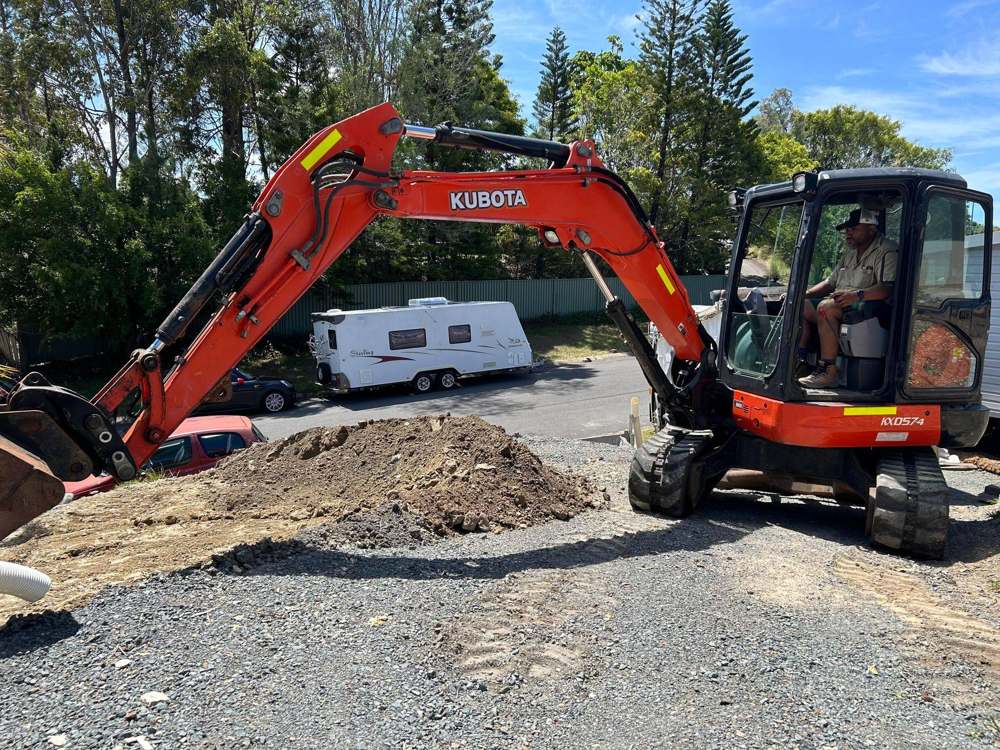
We dig pools across Brisbane’s south and south-west, Logan and Ipswich with a 6 tonne excavator that fits down most side accesses, an 8 tonne for the bigger digs and open yards, a 95hp skid steer for loading and tidy-up, and our own tipper. The pool excavation page covers the service itself. This post is about the money.
What is actually in a pool excavation quote?
A pool dig is not one job. It is five jobs that happen in a day or two, and each one has a cost attached.
- Getting the machine in. Floating the excavator to site, walking it down the side of the house, and protecting whatever is in the way: pavers, a driveway, the neighbour’s fence, the gas meter.
- The dig itself. Hours on the machine to the pool builder’s set-out: length, width, the deep end, the step and bench profile, and the over-dig the shell or the concrete crew needs around it.
- Loading and carting spoil. Every bucket that comes out has to go somewhere. Loading a tipper in a backyard is slow because the truck is usually out on the street, not next to the hole.
- Tipping. Clean fill goes to a fill site; mixed soil, clay and rock goes to a tip at a higher rate per tonne. This is the line that surprises people.
- Tidy-up and trim. Trimming the floor and walls, cleaning the access, and leaving the site so the pool builder can walk straight in.
When you compare quotes, check that all five are in each one. A low number that says “excavation only” and leaves spoil removal to you is not a low number.
How does access change the price?
Access is the first thing we look at on a pool job, before the ground. A 6 tonne excavator needs close to two metres of clear width to track down the side of a house, and it needs that width the whole way: not just at the gate, but past the air conditioner, the hot water unit and the retaining wall. On a block in Calamvale with a wide side access and a flat yard, the machine is in the hole within half an hour of arriving. On a tight block in Carindale with a 1.2 metre gap and a sloping driveway, the options are a smaller machine that digs at half the pace, pulling a fence panel, or craning the machine over the house. Each of those adds hours or a crane hire to the quote.
Where the tipper can park matters just as much. If the truck sits at the kerb and the spoil has to be ferried out with the skid steer, you are paying for two machines and an operator who spends the day driving back and forth. A yard where the truck can back up near the hole is the lowest-cost kind of yard to dig in.
Why does soil and rock matter so much?
Brisbane’s southern suburbs are not one soil type. You get sandy loam along the old creek flats, reactive black and grey clays through much of Logan and the south-west, and weathered rock close to the surface on the ridges through places like Parkinson and the hill suburbs. Each digs differently.
- Loam and dry clay dig at full pace with a general purpose bucket. This is the ground every quote assumes unless you tell us otherwise.
- Wet clay sticks in the bucket, bulks up more when it is loaded, and turns the access into a mess that has to be cleaned up afterwards.
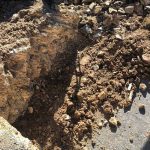
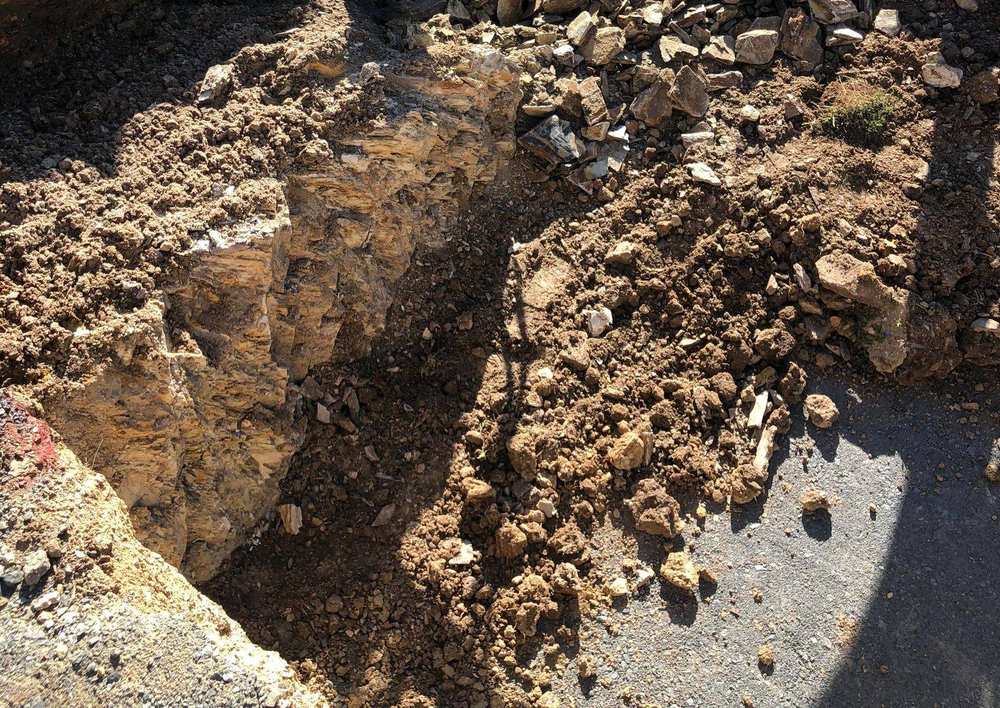
- Weathered rock is where the price jumps. A ripper tyne can sometimes pull it apart; often it needs a hydraulic breaker, which means slow going, more hours, and rock that costs more to tip. The photo at the top of this post is what that looks like in a cut: a shelf of rock that was not on anybody’s plan.
If the pool builder or the engineer has a soil report for the site, send it with the enquiry. If not, tell us what the neighbours hit when they put their pool in. It is a surprisingly good guide. Our post on excavation cost per cubic metre goes deeper on how ground type changes the rate.
How much spoil comes out of a pool?
More than the pool holds. A backyard pool shell might take around 50 cubic metres of water, but the hole is over-dug for the shell, the plumbing and the working room around it, and the soil bulks up by a quarter to a third once it is loose. So the tipper is carting a good deal more than the pool volume, and it is the loaded, bulked volume you pay to move and tip, not the size of the pool. That is the pool excavation cost driver most people miss when they compare quotes.
Three things decide what that spoil costs: how many truck trips it takes, how far the tip or fill site is from the block, and what the material is. Clean fill that another site can use costs the least to get rid of. Clay goes to a tip. Rock and mixed material cost more per tonne again. If part of the spoil can stay on site for landscaping or a raised garden bed, say so early. It takes trips off the quote.
What happens if there is water in the hole?
Low blocks near creeks and drainage lines across the south and Logan can hit a water table or perched water within a couple of metres, and a wet-season dig in February can fill with rain overnight. Either way the floor turns to soup and the pool builder cannot pour on it. The fix is pumping, a drainage layer or stabilised base under the shell, and sometimes a day’s wait for it to dry. All of that is time and material that was not in a dry-block quote. Timing a pool dig for the drier months is one of the easiest ways to keep the cost down.
Do you need approval before the pool is dug?
Yes, and it is the pool builder’s job to arrange it, but it pays to know what is involved. The QBCC’s build a pool page says you must get building approval from your local council or a private certifier before building a pool, that domestic building work over $3,300 needs a written contract, and that the pool fence has to be inspected and certified before the pool is filled to 300 mm or more. SPASA’s consumer guide, Pool Spa Life on permits and cost, recommends getting three quotes for the construction and budgeting for landscaping as part of the project, which is sound advice for the dig as well.
On the planning side, Brisbane City Council’s filling and excavation page says planning approval is not needed for a change of ground level of up to one vertical metre unless the site is in a neighbourhood plan area or affected by an overlay. A pool dig usually goes deeper than that, which is why it rides on the building approval rather than a separate planning one. We also lodge a Before You Dig Australia enquiry on every pool job and locate services before the bucket goes in. Our post on what happens before we dig explains that step.
One more thing to sort before the machine arrives: trees. If a gum sits where the pool is going, or its roots run through the dig, the tree removal crew at Dynamic Tree Solutions deals with it first, including any council tree permit, so we are not digging around a stump on the day.
How long does a pool dig take?
On a block with decent access and ordinary ground, the dig and spoil removal is a one-day job, sometimes with a short second morning for trim and clean-up. Tight access, rock or water can push it to two or three days. The pool builder will tell you when they want the hole ready; we work back from that date and tell you if the ground or the access means we need longer.
What should you send us for a quote?
- The pool builder’s set-out drawing with the pool dimensions and depths.
- Photos of the side access from the street to the backyard, including the narrowest point.
- A photo of where a truck could park, and whether it is a busy street.
- Any soil report or engineer’s note on the ground, or what the neighbours found.
- The date the pool builder wants the hole.
With those we can usually quote without a site visit. If the access is marginal we come and measure it, because a wrong guess on access costs both of us a day.
Ready to price a pool dig in Brisbane’s south, Logan or Ipswich? Call 0424 168 352 or send the drawings and photos through the contact page.
Frequently asked questions
How much does pool excavation cost in Brisbane?
It depends on access, the ground, how much spoil leaves the site and whether there is water in the hole. A flat block with wide side access and dry loam is at the lower end; a tight block with rock or a wet floor is at the upper end. Send the pool set-out and access photos and we quote it properly rather than guessing.
Do I need council approval to dig a pool?
A pool needs building approval from your council or a private certifier before construction, and the pool builder normally arranges it. Brisbane City Council does not require separate planning approval for a change in ground level of up to one vertical metre unless the site is in a neighbourhood plan area or affected by an overlay, so a pool usually rides on the building approval.
How long does pool excavation take?
Usually one day for the dig and spoil removal on a block with reasonable access and ordinary soil, sometimes with a short second morning for trimming. Rock, tight access or water can stretch it to two or three days.
Does the spoil removal get included in the quote?
In ours, yes: loading, carting and tipping are separate lines so you can see what each costs. Check any other quote for the words excavation only, because spoil removal is often the biggest part of the bill.
Can you dig a pool on a sloping block?
Yes. A slope changes how the machine gets in, where the spoil goes and whether the deep end hits rock, so the quote takes longer to put together and may need a site visit, but sloping blocks across Brisbane's south are dug all the time.
What areas do you cover for pool excavation?
Brisbane's south and south-west, Logan and Ipswich. Commercial and civil work further out is by quote.