Site Preparation Cost Brisbane — 2026 Pricing Overview
Understanding site preparation cost Brisbane is fundamental to accurate project budgeting for any development in South East Queensland. Whether you’re a developer breaking ground on a Woolloongabba mixed-use project or a builder coordinating works in Sunnybank, the financial reality of civil works determines feasibility from day one.
At Dynamic Earth Solutions, we’ve compiled this comprehensive 2026 budget guide drawing on current market rates, verified contractor data, and real project costs across Brisbane’s southern corridors. As an indigenous-owned civil contractor with Supply Nation registration, we bring transparent pricing alongside genuine community value.
The 2026 landscape presents distinct pricing pressures. Diesel costs, equipment hire rates, disposal levies, and skilled labour shortages continue influencing quotes across every earthworks category. Brisbane’s development boom—particularly through Rocklea, Salisbury, and the Archerfield industrial precinct—has created sustained demand that affects availability and pricing.
What Determines Site Preparation Costs in Brisbane?
Site preparation encompasses everything required to transform raw land into a construction-ready platform. This includes vegetation clearing, demolition of existing structures, earthworks, drainage installation, and service connections. Each element carries independent cost drivers.
Critical factors affecting your final quote include:
- Site access constraints — Tight residential blocks in suburbs like Greenslopes require smaller equipment at higher hourly rates
- Soil conditions — Rocky substrates common through Camp Hill and Coorparoo increase excavation time substantially
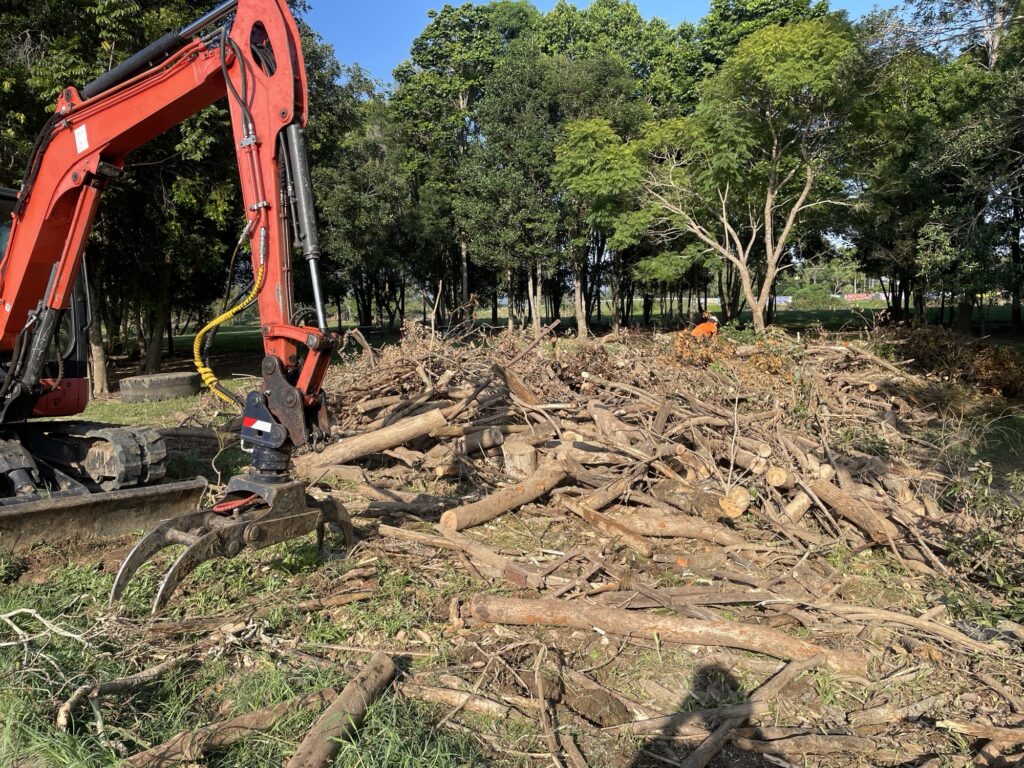
- Vegetation density — Sites requiring land clearing Brisbane services add significant preliminary costs
- Disposal requirements — Contaminated soil, asbestos presence, or regulated waste affects removal pricing dramatically
- Council requirements — Brisbane City Council planning and development conditions vary by zone and overlay
2026 Brisbane Site Preparation Cost Summary Table
| Service Category | Typical Range (2026) | Unit Basis | Key Cost Drivers |
|---|---|---|---|
| Site Clearing (Light) | $2,500 – $8,000 | Per residential lot | Vegetation density, access |
| Site Clearing (Heavy/Commercial) | $15,000 – $85,000+ | Per hectare | Timber volume, terrain, permits |
| Bulk Excavation | $45 – $95 | Per cubic metre | Soil type, depth, disposal distance |
| Site Levelling/Grading | $8 – $22 | Per square metre | Cut/fill balance, compaction specs |
| Drainage Installation | $85 – $280 | Per linear metre | Pipe diameter, depth, connection type |
| Demolition (Residential) | $12,000 – $45,000 | Per structure | Size, materials, asbestos presence |
| Demolition (Commercial) | $25 – $85 | Per square metre | Structural complexity, height |
| Tree Removal | $450 – $15,000+ | Per tree | Species, size, location, permits |
| Stump Grinding | $150 – $800 | Per stump | Diameter, root system, access |
These figures represent median contractor rates across South Brisbane. Actual quotes vary based on project-specific conditions, timing, and contractor availability. For accurate budgeting, we recommend obtaining three comparable quotes—more on evaluation methodology in our checklist section below.
Cost Breakdown by Service — What You’re Actually Paying For
Developers frequently encounter significant variance between initial estimates and final invoices. Understanding the component breakdown behind each service category eliminates budget surprises and enables informed contractor negotiation.
Our complete civil services list covers the full spectrum of site preparation works. Below, we examine each category’s cost structure in detail.
Labour vs Equipment vs Materials
Civil works pricing comprises three primary cost centres. Their proportional contribution varies by service type:
| Service Type | Labour % | Equipment % | Materials/Disposal % |
|---|---|---|---|
| Bulk Excavation | 15-20% | 45-55% | 25-35% |
| Site Levelling | 20-25% | 50-60% | 15-25% |
| Drainage Installation | 30-40% | 25-35% | 30-40% |
| Demolition | 25-35% | 30-40% | 30-40% |
| Tree Clearing | 35-45% | 35-45% | 15-25% |
Equipment-intensive services like bulk excavation see greater price sensitivity to fuel costs. Labour-dominant activities like drainage installation respond more directly to wage pressures. Understanding these proportions helps interpret quote variations between contractors.
Mobilisation and Establishment Costs
Every civil project carries fixed mobilisation costs regardless of scope. These include:
- Equipment transport to site (typically $500 – $2,500 depending on machinery)
- Site establishment—temporary fencing, amenities, safety infrastructure
- Survey setup and level transfers
- Erosion and sediment control installation per Brisbane City Council stormwater drainage requirements
- Traffic management where applicable
For smaller projects, mobilisation can represent 15-25% of total cost. Larger developments absorb these fixed costs across greater work volumes, improving per-unit rates. This explains why subdivision site prep typically achieves better cubic metre pricing than single-lot works.
Bulk Excavation Pricing — Brisbane 2026 Rates
Bulk excavation forms the foundation of most site preparation budgets. Whether you’re creating basement car parking in Woolloongabba or establishing pad levels for a Capalaba warehouse, understanding excavation pricing Brisbane contractors apply in 2026 ensures accurate feasibility analysis.
Our bulk and detailed excavations team works across South Brisbane and the Gold Coast, providing current insight into market conditions.
Per Cubic Metre Rates Explained
Brisbane bulk excavation pricing typically ranges from $45 to $95 per cubic metre in 2026. This variance reflects genuine cost differences rather than contractor markup alone.
Lower-end pricing ($45-$60/m³) applies when:
- Soil conditions are favourable—sandy loams or clay without rock
- Disposal sites accept material within 15km radius
- Volumes exceed 500m³, enabling continuous machine operation
- Access allows 20-tonne excavators and road trucks
- Material can be reused on-site for fill or stockpiled for later
Higher-end pricing ($70-$95/m³) reflects:
- Rock excavation requiring hydraulic breaking
- Contaminated material requiring licensed disposal
- Restricted access limiting equipment size
- Sites requiring extensive shoring or benching
- Long cartage distances to disposal facilities
Soil Conditions Across South Brisbane
Brisbane’s geology creates distinct excavation conditions by suburb. Experienced contractors factor these known conditions into pricing:
Easier excavation conditions: Carindale, Sunnybank, Runcorn—predominantly alluvial deposits and reactive clays. Standard excavation methods apply.
Moderate difficulty: Greenslopes, Holland Park, Mount Gravatt—mixed conditions with occasional sandstone encounters requiring rock bucket changes.
Challenging conditions: Camp Hill, Coorparoo, Norman Park—significant metamorphic rock presence. Budget 40-60% premium over standard rates for basement excavations in these suburbs.
Before finalising budgets, geotechnical investigation provides certainty. The $3,000-$8,000 investment in proper soil testing frequently saves multiples of that figure by enabling accurate bulk excavation pricing from tenderers.
Disposal and Cartage Considerations
Disposal costs represent an increasingly significant component of earthworks cost Brisbane contractors pass through. Key factors include:
- Clean fill: Many disposal sites now charge $15-$25 per tonne, up from nominal fees five years ago
- Contaminated material: Licensed facilities charge $85-$250+ per tonne depending on contamination classification
- Cartage distance: Every kilometre beyond 15km adds approximately $1.50-$2.50 per cubic metre
For significant excavations, investigate material reuse opportunities. Developments with cut-to-fill balance dramatically reduce disposal costs. Our excavation services team routinely identifies on-site reuse options that benefit project budgets.
Site Levelling and Grading — Platform Preparation Costs
Achieving design levels and appropriate gradients requires precision earthworks. Site levelling and grading costs in Brisbane for 2026 range from $8 to $22 per square metre, influenced by cut/fill requirements and compaction specifications.
Cut and Fill Balance Optimisation
Intelligent site design minimises earthworks costs through cut/fill balance. When excavated material can be reused as fill elsewhere on-site, disposal and import costs both reduce.
Key considerations affecting grading budgets:
- Natural fall: Sites with gradients exceeding 1:6 require extensive earthworks for level platforms
- Retaining requirements: Level changes may necessitate structural walls, adding $450-$1,200 per linear metre
- Compaction specifications: Commercial developments typically require 98% Standard Proctor versus 95% for residential
- Import requirements: Where fill import is necessary, budget $35-$55 per cubic metre delivered and placed
Compliance with AS 3798
All commercial site grading in Brisbane must comply with AS 3798 — Guidelines on earthworks for commercial and residential developments. This standard governs:
- Material selection for fill
- Layer thickness and moisture conditioning
- Compaction testing frequency
- Documentation and certification requirements
Geotechnical testing and certification adds $2,000-$8,000 to typical projects, varying by area and test frequency requirements. This is non-negotiable for developments requiring engineer’s certification.
Our building site preparation services include coordination with geotechnical engineers to ensure compliant earthworks delivery.
Drainage and Stormwater — Installation Cost Analysis
Effective drainage infrastructure protects developments from water damage while meeting council stormwater management requirements. Drainage installation cost Brisbane contractors apply in 2026 varies significantly based on system complexity and pipe specifications.
Sub-Surface Drainage Pricing
Typical 2026 rates for civil drainage installation include:
| Drainage Type | Price Range (Per LM) | Typical Applications |
|---|---|---|
| 100mm Agricultural Drain | $45 – $75 | Subsoil drainage, garden beds |
| 150mm PVC Stormwater | $85 – $130 | Residential downpipe connections |
| 225mm PVC Stormwater | $120 – $180 | Combined roof drainage |
| 300mm PVC/RCP | $160 – $240 | Commercial collections |
| 450mm RCP | $220 – $320 | Subdivision trunk drainage |
| 600mm+ RCP | $350 – $550+ | Major infrastructure |
These rates include excavation, pipe supply, bedding material, backfill, and basic reinstatement. Connections to council infrastructure, pits, and junction boxes carry additional itemised costs.
Council Connection Requirements
Brisbane stormwater connections require council approval and typically involve:
- Connection application fees ($1,500-$4,500 depending on connection size)
- Inspection fees during construction
- As-built survey requirements
- Headwall construction where connecting to open channels
Brisbane City Council stormwater drainage regulations mandate specific connection methods and minimum pipe grades. Non-compliant installations face rectification orders.
Stormwater Quality Devices
Many Brisbane developments now require stormwater quality improvement devices (SQIDs). Budget allowances include:
- Gross pollutant traps: $8,000 – $35,000 installed
- Bioretention basins: $150 – $350 per square metre
- Sediment basins (construction phase): $5,000 – $25,000
- Oil/water separators: $12,000 – $45,000 for commercial applications
These requirements significantly affect subdivision and commercial development budgets. Early hydraulic engineering engagement identifies obligations and optimises designs.
Demolition Pricing — Brisbane 2026 Market Rates
Redevelopment sites require existing structure removal before new construction commences. Demolition cost Brisbane contractors charge in 2026 reflects rising disposal levies and increasingly stringent asbestos management requirements.
Our demolition services team provides transparent pricing across residential and commercial projects.
Residential Demolition Cost Factors
A standard Brisbane residential demolition (typical 150-250m² dwelling) ranges from $12,000 to $45,000. This variance reflects:
- Size: Larger homes cost more but achieve better per-square-metre rates
- Construction type: Brick and concrete structures cost 30-50% more than timber-framed dwellings
- Asbestos presence: Identified asbestos adds $3,000-$15,000+ depending on extent
- Site access: Rear demolitions or restricted access adds significant cost
- Service disconnections: Power, water, gas, and sewer disconnection fees ($1,500-$4,000)
- Council permits: Brisbane demolition permits run $500-$1,500
Commercial and Industrial Demolition
Larger structures typically price on a per-square-metre basis. 2026 Brisbane rates range:
- Light industrial sheds: $25 – $45/m²
- Masonry commercial buildings: $45 – $70/m²
- Concrete tilt-up: $55 – $85/m²
- Multi-storey structures: $65 – $120/m² (height-dependent)
These rates assume standard demolition methods. Structures requiring surgical demolition adjacent to retained buildings or heritage constraints command significant premiums.
Asbestos Management Obligations
Queensland legislation requires licensed asbestos removal for all identified asbestos-containing materials. Pre-demolition surveys are mandatory for structures built before 1990.
WorkSafe Queensland excavation guidelines also apply where asbestos-contaminated soil may be present from prior building works.
Budget allowances for asbestos management:
- Pre-demolition survey: $450 – $1,500
- Removal of minor fragments: $1,500 – $4,000
- Extensive removal (eaves, cladding, fencing): $5,000 – $25,000+
- Contaminated soil removal: $250 – $450 per cubic metre
Our safety and compliance standards ensure all demolition works meet regulatory requirements.
Tree Removal and Clearing Costs — Critical Budget Considerations
Vegetation management represents one of the most variable cost categories in site preparation. Site clearing cost Brisbane ranges dramatically based on species, density, and council permit requirements. Getting this element wrong creates significant budget exposure.
For all arboricultural works, we partner with our sister company, Dynamic Tree Solutions. Their professional tree removal Brisbane services ensure compliant, efficient vegetation clearing that integrates seamlessly with civil works programming.
Tree Removal Cost Variables
Tree removal cost development projects face in 2026 depends on multiple factors:
| Tree Size Category | Typical Cost Range | Key Considerations |
|---|---|---|
| Small (under 5m height) | $350 – $1,200 | Often straightforward, minimal permits |
| Medium (5-10m height) | $800 – $3,500 | May require sectional removal |
| Large (10-20m height) | $2,500 – $8,000 | Crane access often necessary |
| Very Large (20m+ height) | $6,000 – $15,000+ | Complex rigging, specialist equipment |
| Protected Species | Premium 50-200%+ | Permit requirements, offsets |
Species significantly affects pricing. Dense hardwoods like Ironbark require substantially more cutting time than softer species. Fig trees with extensive root systems complicate removal and add cost.
Council Permit Requirements
Brisbane tree removal requires careful navigation of council regulations. Permits are typically required for trees exceeding threshold sizes or located in protected overlays.
Before commencing any clearing, obtain consulting arborist reports to establish permit requirements and tree protection obligations. These reports identify:
- Which trees require permits for removal
- Significant vegetation overlays affecting the site
- Tree protection zone requirements for retained specimens
- Offset planting obligations where removal is approved
Failure to obtain required permits before clearing exposes developers to substantial penalties. Brisbane City Council actively enforces vegetation protection, with fines exceeding $50,000 for significant breaches.
For detailed guidance, refer to Brisbane City Council tree regulations resources.
Stump Removal Considerations
Tree removal costs typically include felling and timber removal but not stump grinding. For construction sites, stump removal is essential to enable excavation and footing installation.
Stump grinding services typically cost $150-$800 per stump, depending on:
- Stump diameter at ground level
- Root system extent
- Access for grinding equipment
- Grinding depth required (construction sites typically require 300-500mm below grade)
For sites with numerous stumps, package pricing improves per-unit rates. Discuss combined tree removal and stump grinding quotes to achieve cost efficiencies.
Land Clearing for Development Sites
Larger sites requiring comprehensive vegetation clearing need specialist land clearing Brisbane services. Pricing approaches include:
- Per hectare rates: $15,000 – $85,000+ depending on density and species
- Forestry mulching: Often the most economical approach for dense undergrowth
- Selective clearing: Retaining significant specimens adds complexity and cost
Commercial and subdivision developers should engage clearing specialists early in project planning. Our tree clearing for construction services coordinate with arboricultural teams to deliver efficient site preparation.
Tree Protection During Construction
Where trees are retained on development sites, protection measures are mandatory under Australian Standard AS 4970 — Protection of trees on development sites.
Protection requirements include:
- Tree Protection Zones (TPZ) established around retained trees
- Protective fencing installed before any site works commence
- Root-sensitive excavation methods within TPZ areas
- Arboricultural supervision for works near significant trees
Budget $1,500-$8,000 per retained tree for protection measures and supervision during construction. Damage to protected trees during construction creates liability for replacement costs calculated using amenity value formulas—potentially exceeding $100,000 for significant specimens.
Hidden Costs to Budget For — Protecting Your Development Margins
Experienced developers know that quoted prices represent starting points rather than final costs. Comprehensive budgeting accounts for commonly encountered additional expenses.
Pre-Construction Investigation Costs
Before commencing site preparation, prudent developers invest in site investigation:
- Geotechnical investigation: $3,000 – $15,000 depending on site size and bore depth requirements
- Contamination assessment: $2,500 – $12,000 for Phase 1/Phase 2 assessments
- Survey: $1,500 – $5,000 for detail and level survey
- Arborist assessment: $800 – $3,500 for development application support
- Dial Before You Dig: Free service but essential—contact Dial Before You Dig Australia before any excavation
These investigations frequently identify issues affecting site preparation pricing. Discovering rock, contamination, or protected vegetation after contract execution creates costly variations.
Service Location and Protection
Underground services create significant cost exposure during excavation works. Budget considerations include:
- Service location: $300 – $1,500 for electromagnetic location services
- Pot-holing: $150 – $400 per location to physically verify service depth
- Service protection: Concrete slabbing or relocation where services conflict with excavation
- Service damage repair: Accidental damage creates delays and repair costs
Weather and Program Delays
Brisbane’s subtropical climate creates earthworks challenges. Wet weather delays are common, particularly during summer storm season (November-March).
Cost implications include:
- Demobilisation/remobilisation: $1,500 – $5,000 per weather event
- Erosion repair: Reinstating sediment controls and repairing washouts
- Material conditioning: Wet fill requires drying before compaction
- Program compression: Acceleration measures to recover lost time
Our emergency civil works Queensland capabilities help recover programs when weather events impact sites.
Variation-Prone Areas
Certain site preparation elements routinely generate variations:
- Rock excavation: Rarely fully quantifiable before commencement
- Contamination extent: Often exceeds preliminary assessment boundaries
- Undocumented services: Old pipes, cables, and structures encountered during excavation
- Retaining wall footings: Subsurface conditions affecting foundation design
- Stormwater connection points: Existing infrastructure condition affecting connection methods
Prudent budgeting includes 10-15% contingency for site preparation works, recognising the inherent uncertainty in ground-related activities.
Quote Comparison Checklist — Evaluating Civil Contractor Pricing
Comparing site preparation quotes requires methodical evaluation. The lowest price rarely represents best value—understanding inclusions, exclusions, and risk allocation determines true cost.
Essential Quote Evaluation Process
- Verify scope alignment: Ensure all quotes respond to identical scope documents. Specification differences invalidate direct comparison.
- Check measurement basis: Confirm whether quantities are provisional (remeasured) or lump sum (fixed). This affects risk allocation.
- Review exclusions carefully: Low prices often exclude rock, contamination, or service protection. List exclusions and price risk exposure.
- Assess disposal assumptions: Verify disposal location assumptions match site conditions and material classifications.
- Confirm compliance inclusions: Testing, certification, and inspection costs should be itemised.
- Evaluate program: Duration affects financing costs and downstream trade coordination.
- Check insurance and licensing: Verify Queensland Building and Construction Commission licensing and adequate public liability coverage.
- Request references: Contact recent clients for similar project types.
Red Flags in Civil Quotes
Warning signs suggesting quotes warrant careful scrutiny:
- Pricing significantly below market norms (often indicates scope misunderstanding or deliberate under-pricing)
- Vague or absent exclusion lists
- No site visit before quoting
- Unable to provide QBCC licence number
- Reluctance to provide itemised breakdown
- No reference projects available
Questions to Ask Prospective Contractors
Before engaging a civil contractor, clarify:
- What assumptions have you made regarding soil conditions?
- How do you handle rock excavation—is it included or provisional?
- Which disposal facility will you use, and what material classifications apply?
- What is your approach to wet weather management?
- Who will supervise works on site daily?
- What is your variation approval process?
- Do you carry adequate insurance for this project value?
To discuss your project requirements, contact our team for obligation-free consultation.
Subdivision Site Prep Cost — Multi-Lot Development Considerations
Subdivision projects involve additional complexity beyond single-lot developments. Subdivision site prep cost reflects infrastructure requirements, staging considerations, and council engineering standards.
Per-Lot Cost Benchmarks
Brisbane subdivision site preparation costs typically range from $25,000 to $85,000 per lot, varying based on:
- Lot size: Smaller lots achieve better per-lot rates but may have higher density constraints
- Terrain: Sloping sites require extensive earthworks for level building pads
- Infrastructure extent: Road, drainage, and service infrastructure requirements
- Council standards: Different councils apply varying road and drainage specifications
Infrastructure Requirements
Subdivision civil works typically include:
- Road construction (pavement, kerb, channel)
- Stormwater drainage trunk infrastructure
- Inter-allotment drainage where required
- Footpath and bikeway construction
- Service conduits and headwalls
- Lot grading and compaction
Council engineering approval governs all infrastructure design and construction. Brisbane City Council planning and development requirements differ from Logan City Council planning or Ipswich City Council planning standards.
Staging and Cash Flow Considerations
Multi-stage subdivisions require careful civil works planning to optimise cash flow:
- Trunk infrastructure often front-loaded, creating early cash flow pressure
- Temporary works (construction access, sediment basins) carry staging premiums
- Equipment mobilisation efficiency improves with continuous stage releases
Experienced subdivision developers engage civil contractors early in the planning phase to inform staging strategies and financial modelling.
Working with Indigenous-Owned Civil Contractors
Engaging indigenous-owned businesses delivers project value beyond competitive pricing. Dynamic Earth Solutions offers Supply Nation certification, creating procurement opportunities for organisations with indigenous participation targets.
Our indigenous-owned story reflects genuine community connection across South Brisbane. For government and corporate projects requiring indigenous participation, our Supply Nation registration provides verified certification.
To learn more about our team, including our capabilities across civil and excavation works, explore our background and qualifications.
Frequently Asked Questions
What is the average site preparation cost in Brisbane for a standard residential block?
A standard residential block in Brisbane (typically 450-700m²) requires site preparation investment ranging from $8,000 to $35,000 depending on existing conditions. This includes site clearing, basic excavation, pad preparation, and drainage connections. Blocks requiring significant cut and fill, tree removal permits, or demolition of existing structures will exceed this range. Rock presence, common in suburbs like Camp Hill and Coorparoo, adds 40-60% to excavation costs. Always obtain site-specific quotes—generic estimates rarely reflect actual conditions in Brisbane’s varied geology.
How much does bulk excavation cost per cubic metre in Brisbane in 2026?
Brisbane bulk excavation rates in 2026 range from $45 to $95 per cubic metre. The lower end applies to straightforward soil conditions with nearby disposal facilities and good site access. Higher rates reflect rock excavation, contaminated material disposal, restricted access, or long cartage distances. Most residential projects fall in the $55-$75 range for standard conditions. Commercial basement excavations in inner-city locations typically price at $70-$95/m³ due to space constraints and spoil management challenges. Request itemised quotes separating excavation from disposal to understand cost drivers.
Do I need council approval before starting site preparation works?
Council approval requirements depend on work type and site characteristics. Tree removal typically requires permits for trees exceeding threshold sizes or within vegetation overlays—engage arborists for consulting arborist reports to establish requirements. Demolition requires permits in Brisbane. Earthworks may trigger requirements depending on volume and proximity to boundaries or waterways. Erosion and sediment control plans are mandatory for most development sites. Stormwater connections require separate approval. Contact Brisbane City Council planning before commencing works to confirm specific requirements for your site.
How long does typical site preparation take for a residential development?
Residential site preparation timelines vary significantly based on scope. A straightforward block requiring minimal clearing and basic earthworks completes in 3-5 days. Sites requiring demolition, significant tree removal, substantial cut and fill, or drainage installation typically require 2-4 weeks. Add time for permit processes—tree removal permits can take 4-8 weeks, demolition permits 2-3 weeks. Weather impacts are significant; budget additional contingency during Brisbane’s wet season (November-March). Complex sites with rock, contamination, or heritage constraints may extend to 6-8 weeks or longer.
What is included in a standard site clearing quote?
Standard site clearing quotes should include vegetation removal, mulching or disposal of cleared material, stump treatment, and site clean-up. Verify whether the quote includes tree removal (typically priced separately for significant specimens), stump grinding services, and surface debris removal. Check exclusions carefully—some quotes exclude rock removal, demolition of structures, or disposal of non-organic waste. Council permit fees are typically excluded. Always request itemised breakdowns distinguishing between clearing labour, equipment, and disposal components to enable accurate comparison.
How does soil type affect excavation pricing in Brisbane?
Brisbane’s varied geology creates significant excavation price variance. Sandy and alluvial soils (common in Carindale, Sunnybank) excavate efficiently at base rates. Reactive clays require careful management but excavate at standard rates. Rock presence dramatically increases costs—metamorphic rock common through Camp Hill, Norman Park, and Coorparoo requires hydraulic breaking, adding $30-$60 per cubic metre. Some contractors quote rock as provisional, pricing only when encountered. Geotechnical investigation before tendering provides certainty and enables fixed-price arrangements, protecting both parties from unexpected cost blowouts.
What permits are required for tree removal on development sites?
Tree removal permit requirements vary by council and tree characteristics. Brisbane City Council generally requires permits for trees exceeding 2-3 metres height with trunk circumferences above threshold sizes. Significant vegetation overlays, character residential areas, and waterway corridors impose additional restrictions. Protected species require specific approval regardless of size. Engage consulting arborist reports to identify permit requirements before site works. Removal without required permits triggers substantial fines and potential prosecution. Allow 4-8 weeks for permit processing and factor permit fees ($300-$1,500) into budgets.
Should I engage separate contractors for tree removal and earthworks?
Coordinated engagement typically delivers better outcomes than fragmented contracting. Tree removal must complete before earthworks commence, requiring careful programming. Integrated contractors coordinate timing efficiently. However, arboricultural work requires specialist qualifications distinct from civil contractors. Our approach partners Dynamic Earth Solutions civil works with Dynamic Tree Solutions for professional tree removal Brisbane services, delivering seamless coordination with appropriate specialist credentials for each component. This model provides single-point accountability while ensuring qualified personnel for each trade element.
What are the typical hidden costs in site preparation projects?
Common hidden costs include rock excavation (rarely quantifiable before commencement), contaminated material disposal (especially on former industrial sites), service relocation (when existing services conflict with excavation), permit fees and council charges, geotechnical testing and certification, wet weather delays and remobilisation, and erosion control maintenance. Underground services frequently differ from records, creating discovery costs. Budget 10-15% contingency for site preparation works. Comprehensive pre-construction investigation reduces but never eliminates hidden cost exposure. Detailed site assessment before pricing commitment remains the most effective risk mitigation strategy.
How do drainage installation costs vary across Brisbane suburbs?
Drainage costs vary based on connection availability, ground conditions, and council requirements. Inner-city suburbs (Woolloongabba, Greenslopes) often have existing infrastructure nearby, reducing connection distances but increasing traffic management costs. Outer suburbs may require longer trunk connections or on-site detention systems. Ground conditions affect trenching costs—rock increases pricing substantially. Brisbane City Council stormwater drainage requirements apply citywide, but connection fees and inspection requirements vary by catchment. Budget $85-$280 per linear metre for standard drainage plus connection fees ranging $1,500-$4,500.
What qualifications should a site preparation contractor hold?
Civil contractors undertaking site preparation in Queensland must hold appropriate Queensland Building and Construction Commission licensing. Verify licence class covers the work scope—some contractors hold limited licence categories. Public liability insurance ($10-$20 million) is essential for development sites. Workers’ compensation coverage must be current. For projects involving hazardous materials, additional licensing applies. Industry associations like Civil Contractors Federation Queensland provide professional development and standards compliance support. Request licence numbers, insurance certificates, and recent project references before engagement.
How can I reduce site preparation costs without compromising quality?
Effective cost reduction strategies include optimising cut/fill balance through design refinement, retaining suitable excavated material for fill rather than importing, staging works to maintain continuous equipment operation, combining tree removal and earthworks through coordinated contractors, timing projects outside peak season (avoiding pre-Christmas rush), obtaining multiple competitive quotes to benchmark pricing, and investing in proper site investigation to eliminate surprise costs. Avoid false economies—inadequate compaction, poor drainage design, or non-compliant tree removal create greater long-term costs than proper initial investment.
Start Your Brisbane Development with Accurate Budgets
Accurate site preparation budgeting determines development feasibility. The pricing guidance throughout this article establishes realistic cost expectations for Brisbane projects in 2026, but every site presents unique conditions requiring specific assessment.
At Dynamic Earth Solutions, we deliver transparent, competitive pricing for site preparation across South Brisbane. As an indigenous-owned civil contractor with Supply Nation registration, we offer genuine community value alongside professional civil works delivery.
For tree removal, stump grinding, land clearing, and arboricultural services, our sister company Dynamic Tree Solutions provides qualified commercial tree services that integrate seamlessly with civil works programming.
Ready to discuss your project?
Contact our team today for obligation-free site assessment and detailed quotation. We service developers, builders, and councils throughout South Brisbane and South East Queensland with professional civil and excavation services.
Explore our blog for additional resources, or review our frequently asked questions for quick answers to common queries.