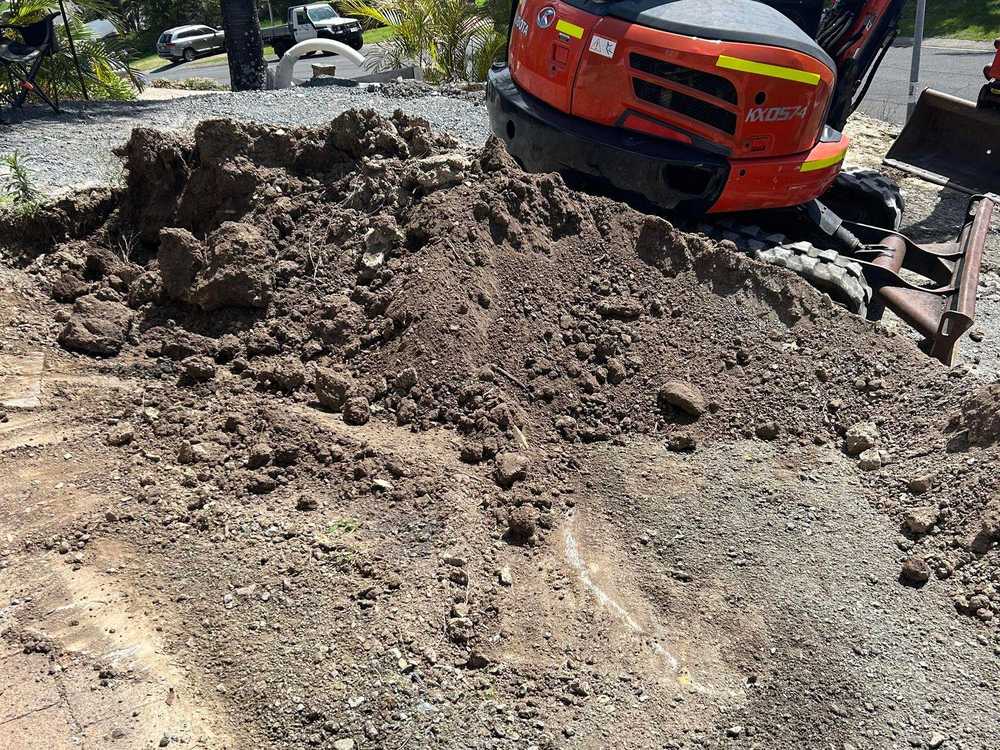
Short answer: bulk earthworks is the phase that moves most of the dirt: strip the topsoil, cut the high side, fill the low side, build the pads and the road formation to roughly the right shape. Detailed excavation is the phase that makes it exact: the final trim to the design levels, the trenches, the footings, the pits and the batters, usually with a smaller machine and a lot more checking. On a civil job in Brisbane’s south the same contractor often does both, and the money is lost when the second phase has to fix the first.
This is the split we work to on subdivision, townhouse and commercial sites, and it is the service behind our bulk and detailed excavation page. Below is what each phase involves, who checks what, which machines do the work and where a 6 and 8 tonne outfit like ours fits on a bigger job.
What does bulk earthworks involve?
Volume. Bulk earthworks is measured in cubic metres and paid for by the hour or the metre, and the aim is to get the site to the engineer’s bulk design surface as fast as the ground and the weather allow. The sequence on most of our civil jobs:
- Clearing and grubbing. Vegetation, stumps and roots out, with the retained trees fenced off first. On a bushy block the arborists go through before we do; Dynamic Tree Solutions handles the clearing of the block so the stumps and the roots are gone before the stripping starts.
- Topsoil strip. Brisbane City Council’s earthworks specification for engineering work, Reference Specification S140 Earthworks, says to remove topsoil to a depth of 100 mm from the areas the works will occupy, and to get direction if it goes deeper. It also says to stockpile it no higher than 1.5 m, keep traffic off it, give it drainage and erosion protection, and sow it with temporary grass if it will sit for more than four weeks. We follow that on private jobs too, so there is topsoil to put back at the end.
- Cut to fill. The excavator cuts the high ground and the skid steer or the tipper moves it to the fill areas. The design tries to balance the two so nothing leaves the site; the ground decides whether that works.
- Fill in layers. Fill goes down in layers and gets compacted, not pushed in a heap. S140’s compacted layer method limits the loose layer to 300 mm for general fill in a road embankment and to 100 to 200 mm for subgrade, and it wants the stone in the fill smaller than two-thirds of the layer.
- Bulk surface. The site is left close to the design, normally a little high, so the detailed phase has something to trim rather than something to fill.
The inspections come from the specification as well. S140 lists tree protection, the stripped areas marked out and the excavation completed to contract levels as witness points, makes the proof roll of the finished subgrade a hold point, and says that if rock or bad ground turns up the contractor gives notice immediately and waits for instructions.
What does detailed excavation involve?
Precision. Once the bulk shape is there, the detailed phase brings every surface to the number on the drawing. On a townhouse or small subdivision site that means:
- Final trim of the pads, the road subgrade and the car park to the design level. S140’s tolerance for a cut or fill subgrade is plus 0 mm and minus 50 mm, with no more than 15 mm under a 3 metre straightedge, which is tighter than a bulk operator is trying for.
- Footings and trenches for the buildings, the retaining walls and the services: see our footings and trenches page for how those run.
- Stormwater pits, lines and the connection to the lawful point of discharge, dug to the hydraulic design and left open for inspection.
- Batters and swales cut to the slope on the drawings. S140 allows the average batter slope to be up to 10 degrees flatter than drawn but never steeper, and never encroaching on the neighbour.
- Replacing unsuitable ground where the engineer finds soft clay or old fill under a pad. S140 wants that replacement compacted to 100 per cent relative compaction, the same standard it sets for a building pad.
Detailed work is where the compaction testing matters most. S140 sets minimum relative compaction by use: 95 per cent for allotment fill on a house lot and 100 per cent for the building pad, 98 per cent for allotment fill on commercial, industrial and multi-unit sites, and 90 to 95 per cent for parks. A geotechnical tester takes the density tests to the AS 1289 methods the specification names, and the engineer signs the fill off on those results. We do not certify fill ourselves and we say so; our job is to place it so it passes.
Which machines do bulk earthworks and which do the detail?
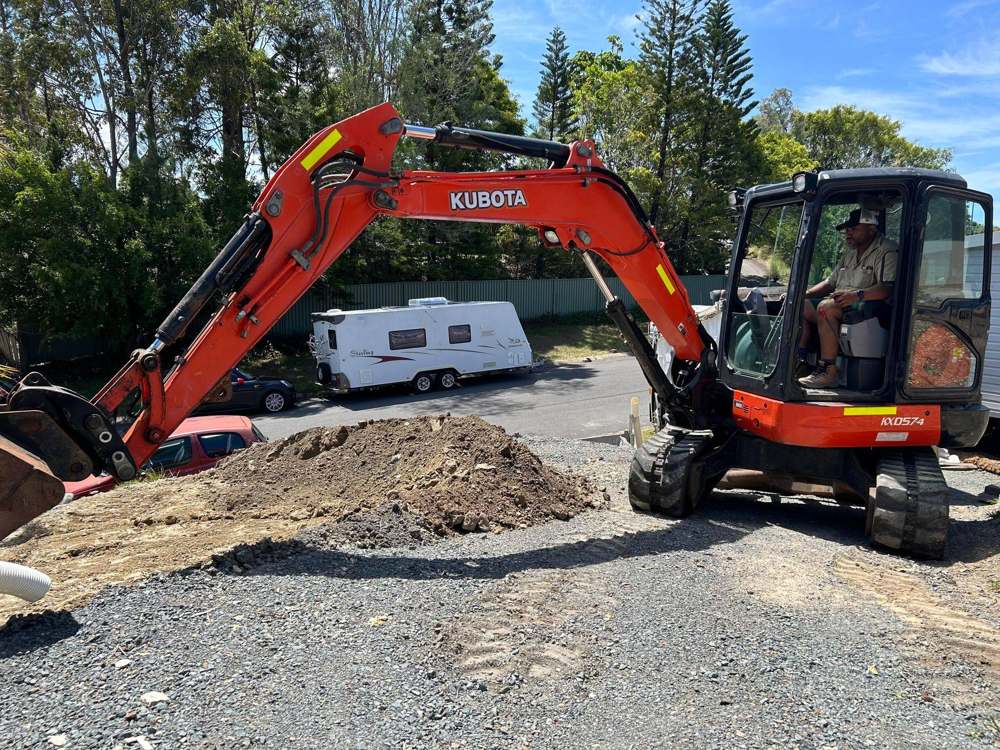
Size follows volume. Bulk earthworks on a big subdivision runs 20 and 30 tonne excavators, dozers and road trucks because every hour has to move a lot of dirt. Our fleet is 6 and 8 tonne excavators, a 95hp skid steer with attachments and a tipper, which is the right size for the bulk phase on a townhouse site, a duplex block, a shed pad or a small industrial lot, and for the detailed phase on jobs of any size.
S140 even defines rock by what a machine can do with it: in a confined excavation, material is non-rippable if a crawler excavator with a heavy-duty bucket cannot rip it faster than a set rate, 3 cubic metres an hour for the 8 tonne class. When we hit it, the breaker comes out and the price conversation happens before the next bucket.
How do survey and set-out keep the two phases honest?
The surveyor sets out the site before bulk starts and again before the detailed trim. Bulk works to pegs and a laser; the detailed phase works to the surveyor’s levels and the engineer’s tolerance, and on a Council job the proof roll of the subgrade is witnessed before anything goes on top. On a smaller job we work to the builder’s set-out and check it against the plan first. Our guide to site cut and fill for Brisbane builders covers the builder’s end of that.
The thing that costs money is the handover. If bulk finishes 150 mm low, the detailed phase is importing fill, compacting it and testing it instead of trimming. If bulk finishes 300 mm high, the detailed phase is carting clay off the site. Leaving the bulk surface a little high and tracking it with the laser avoids both.
What about the ground across Brisbane’s south?
Reactive clay nearly everywhere, which means bulk fill has to be placed at the right moisture content to compact. S140 wants fill within 80 to 100 per cent of optimum moisture, and for the heavy plastic clays it caps the compaction at 92 to 96 per cent so the pad does not heave later. In practice that means watering a dry cut in October and waiting out a wet one in February. Around Pallara and Heathwood the new estates are cut into weathered rock on the ridges and soft clay in the gullies on the same block, so the bulk phase meets both. The low ground at Rocklea and Archerfield has the water table close enough that S140’s dewatering clause is not theoretical.
Erosion and sediment control runs through both phases, not just the first. Silt fence before the strip, stabilised entry before the trucks, and the stockpiles drained and protected as the specification asks. Our post on erosion and sediment control on Brisbane sites has the detail.
Where does Dynamic Earth Solutions fit on a subdivision?
Three places. On a small subdivision or a townhouse site we do the whole job, bulk and detailed, with our own gear. On a bigger subdivision we come in behind the bulk contractor for the detailed phase: the pad trims, the footings, the trenches, the pits and the batters, where a 6 or 8 tonne machine is the right size. And on any civil job we do the awkward bits the big gear cannot reach: the trench beside the retained tree, the cut under the power lines, the pad at the back of the lot. We are a family-owned, Indigenous-owned contractor registered with Supply Nation, which matters to head contractors with Indigenous procurement targets; our post on how we work as Indigenous civil contractors explains how that goes.
If you have a bulk design and a detailed design and you want one contractor who can read both, send the drawings. Call 0424 168 352 or use the quote form and we will tell you which phase we should be on.
Frequently asked questions
What does bulk earthworks involve?
Clearing and grubbing, stripping the topsoil, cutting the high ground, filling the low ground in compacted layers and leaving the site close to the engineer's bulk design surface. It is measured in cubic metres and the aim is volume, not precision. Brisbane City Council's S140 earthworks specification sets the topsoil depth, stockpile rules, layer thickness and compaction standards that most civil designs in Brisbane follow.
What is the difference between bulk earthworks and detailed excavation?
Bulk earthworks moves the dirt to roughly the right shape with big machines. Detailed excavation brings every surface to the exact design level and digs the footings, trenches, pits and batters, usually with smaller machines and more survey checks. On a Council job the subgrade tolerance for the detailed phase is plus 0 mm and minus 50 mm.
Do I need council approval for bulk earthworks?
Usually, once the volume or the change in level goes beyond what the planning scheme treats as minor, and always on a subdivision or a development approval site, where the earthworks are part of the operational works. Brisbane City Council publishes the reference specification the works are built to. We check the approval conditions before we quote and we do not guess the thresholds for you.
How long does bulk earthworks take?
It depends on the volume, the machine size, the haul distance, the ground and the weather. A pad for a shed is a day or two; a townhouse site is a week or more; a subdivision is months with bigger gear than ours. Wet reactive clay is the usual reason a program slips, because fill outside the moisture range will not compact.
Who certifies the fill on a civil job?
The geotechnical engineer, from density tests taken to the AS 1289 methods the specification names, not the excavation contractor. We place and compact the fill in layers so it passes, keep the test results with the job and leave the subgrade for the proof roll before anything goes on top.
What areas do you cover for bulk and detailed excavation?
Brisbane's south and south-west, Logan City and Ipswich City from our yard at Ellen Grove near Forest Lake. Commercial and civil earthworks further out, at Yatala, Eagle Farm or Moreton Bay, are quoted job by job.