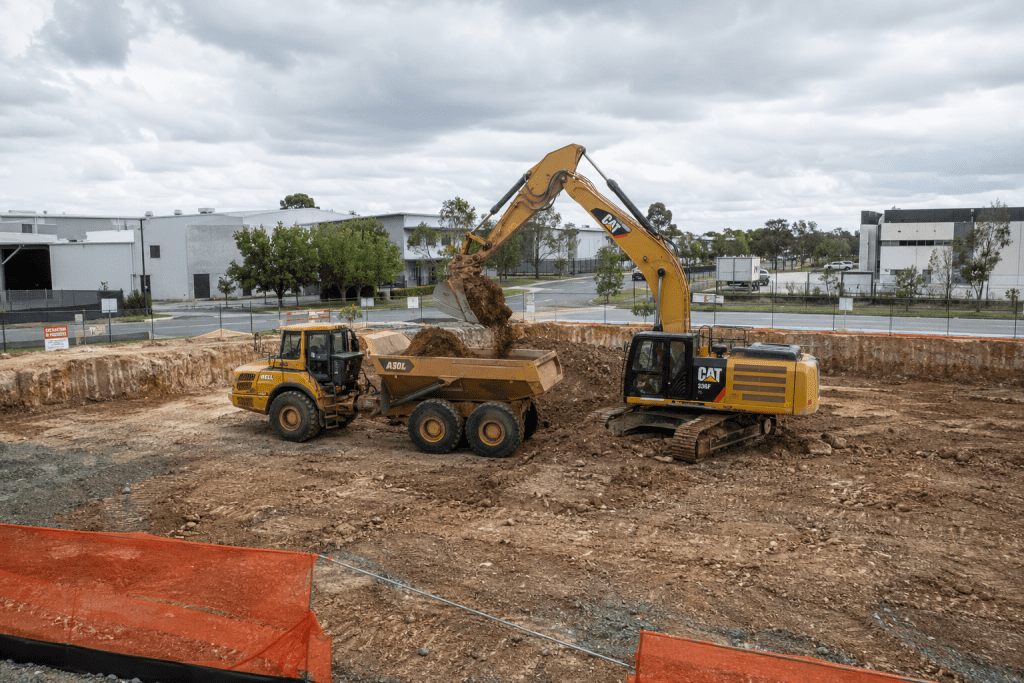
Wacol Is Brisbane’s Quietly Booming Logistics and Industrial Estate
Wacol occupies a strategic position in Brisbane’s industrial corridor that developers and construction firms increasingly recognise as prime territory for logistics, warehousing, and light manufacturing. Situated approximately 20 kilometres southwest of the CBD, this suburb sits at the intersection of the Centenary Highway and Ipswich Motorway—two arterial routes that make it one of South Brisbane’s most accessible industrial zones.
The suburb’s industrial character stretches back decades, but recent infrastructure investment has accelerated commercial interest substantially. Major precincts including the Wacol Industrial Estate, Wacol Station Road corridor, and the broader Queensland Government Industrial Estate draw national logistics operators, cold storage facilities, and manufacturing plants seeking proximity to Port of Brisbane and Ipswich’s western growth areas.
For civil contractors and developers, Wacol presents distinctive challenges. The terrain combines alluvial floodplain soils near Oxley Creek with reactive clay deposits that demand rigorous site preparation before any slab or hardstand can be placed. Brisbane City Council’s planning scheme designates much of the suburb as Industry or Special Purpose zones, streamlining certain approvals while imposing strict stormwater management and environmental overlay requirements.
Adjacent suburbs—Richlands to the north, Darra to the east, and Gailes straddling the Ipswich boundary—share similar soil profiles and industrial zoning. However, Wacol’s relatively larger lot sizes and remaining undeveloped parcels make it particularly attractive for distribution centres requiring 10,000+ square metre footprints with extensive hardstand and truck circulation areas.
Dynamic Earth Solutions has expanded civil and excavation services into South Brisbane specifically to serve this industrial growth corridor. As an indigenous-owned, Supply Nation registered contractor, our team brings both technical capability and procurement pathway advantages for government and tier-1 projects increasingly common in Wacol’s logistics estate.
The suburb’s proximity to Wacol Correctional Centre and several government facilities also generates periodic public infrastructure projects—access road upgrades, stormwater detention basins, and site preparation for ancillary buildings. These projects frequently specify indigenous procurement targets, creating natural alignment with contractors holding genuine Supply Nation certification.
Why Bulk Excavation Matters More in Wacol Than Most South Brisbane Suburbs
Bulk excavation in Wacol carries heightened significance due to three intersecting factors: the scale of typical industrial lots, the variable ground conditions across the suburb, and the critical importance of achieving correct finished surface levels for warehouse slab construction and hardstand drainage.
Unlike residential subdivisions where individual lots might require 200-500 cubic metres of cut or fill, Wacol industrial sites routinely involve bulk and detailed excavations moving 5,000 to 50,000+ cubic metres of material. A single logistics facility on a 2-hectare site may require stripping 300mm of topsoil across the entire footprint (6,000 cubic metres), followed by cut-to-fill operations balancing natural site falls against engineered design levels.
The commercial consequences of inadequate bulk excavation become apparent during subsequent construction phases. Warehouse slabs for modern logistics facilities increasingly specify high-flatness finishes (FM 25 or better) to accommodate automated racking systems and autonomous guided vehicles. Achieving these tolerances requires subgrade preparation that starts with bulk excavation accuracy—typically to tolerances of ±50mm for general fill areas and ±20mm for slab subgrade zones.
Wacol’s position in Brisbane’s western industrial corridor also means many sites have prior industrial use. Former manufacturing facilities, storage yards, and even agricultural operations may have left subsurface anomalies—old footings, buried tanks, compacted rubble layers, or contaminated fill. Bulk excavation contractors working in Wacol must anticipate encountering unexpected conditions and have protocols for classification, stockpiling, and disposal of uncontrolled fill materials.
For developers managing construction programmes, the bulk earthworks phase represents one of the most significant variables affecting project timelines. South Brisbane’s subtropical climate delivers concentrated wet seasons that can halt earthworks entirely when sites become saturated. Experienced contractors working in Wacol understand that scheduling bulk excavation outside peak rainfall months—and maintaining contingency plans when weather turns—separates successful projects from those facing costly delays.
Our complete civil services list reflects this understanding, integrating bulk excavation with drainage installation, site levelling, and building preparation into coordinated packages that minimise weather exposure and handover delays between trades.
Ground Conditions, Acid Sulfate Soils and the Wacol Floodplain
Understanding Wacol’s subsurface conditions is essential before any bulk excavation commences. The suburb’s geology reflects its position on the Oxley Creek floodplain, where alluvial deposits overlay older sedimentary formations. This creates a soil profile that varies significantly across relatively short distances.
Typical Soil Profiles
The upper soil horizons in much of Wacol comprise dark grey to brown alluvial clays, often described in geotechnical reports as high-plasticity clays (CH classification under the Unified Soil Classification System). These materials typically exhibit moderate to high reactivity, with Atterberg limits indicating liquid limits of 50-70% and plasticity indices of 25-40%.
Below the surface clays, contractors commonly encounter:
- Firm to stiff residual clays extending to 2-4 metres depth
- Sandy clay transitional layers with variable gravel inclusions
- Weathered sedimentary rock (typically siltstone or mudstone) at depths varying from 3-8 metres
Testing soils to AS 1289 standards reveals moisture conditions critical for compaction planning. Wacol’s clays frequently sit above optimum moisture content following rainfall, requiring drying-out periods or lime stabilisation before achieving specified compaction densities.
Acid Sulfate Soil Considerations
Brisbane City Council mapping identifies portions of Wacol—particularly areas closer to Oxley Creek and within the broader floodplain—as potential acid sulfate soil (ASS) zones. While Wacol’s elevation generally sits above the most critical ASS risk areas (typically below 5m AHD), some lower-lying industrial sites trigger mandatory investigation requirements.
Where ASS investigations identify actual or potential acid sulfate soils, bulk excavation must comply with approved management plans. This typically involves:
- Lime application rates of 30-100 kg/tonne depending on sulfide content
- Staged excavation to minimise oxidation exposure time
- Controlled stockpiling with drainage capture and treatment
- Verification testing before material reuse or disposal
For industrial sites requiring deep excavation—basement carparks, below-ground detention tanks, or service trenches—ASS management adds both cost and programme complexity. Early geotechnical investigation, ideally before site acquisition or detailed design, allows developers to factor these requirements into feasibility assessments.
Flood Overlay Implications
Much of Wacol falls within Brisbane City Council’s flood overlay mapping, reflecting historical inundation from Oxley Creek and broader Brisbane River catchment events. While flood overlay status doesn’t prohibit industrial development, it influences finished floor levels, site drainage design, and sometimes fill importation requirements.
Bulk excavation contractors must understand how flood studies inform design levels. Many Wacol industrial sites require net fill importation to achieve minimum habitable floor levels—often 300-500mm above defined flood event levels. This transforms what might otherwise be cut-to-fill balanced earthworks into projects requiring significant fill importation, with corresponding implications for truck movements, material sourcing, and compaction staging.
Our approach to building site preparation incorporates flood overlay analysis from the earliest planning stages, ensuring earthworks strategies align with hydraulic requirements rather than discovering conflicts during construction.
Plant Selection for Wacol Bulk Earthworks — Excavators, Scrapers and Trucks
Selecting appropriate plant for Wacol bulk earthworks balances productivity requirements against site constraints, soil conditions, and the specific scope of each project. The industrial scale of typical Wacol projects generally justifies larger equipment than residential or light commercial work elsewhere in Brisbane.
Excavators
For bulk excavation in Wacol’s clay soils, track-mounted hydraulic excavators in the 20-50 tonne class provide optimal balance between production capacity and manoeuvrability. Typical configurations include:
- 20-25 tonne units: Suitable for smaller industrial lots, working in confined areas, or detailed excavation phases. Production rates of 80-150 cubic metres per hour in medium clay.
- 30-40 tonne units: Workhorse class for Wacol industrial bulk cuts. Production rates of 150-300 cubic metres per hour depending on dig depth and material conditions.
- 45-50+ tonne units: Deployed for major logistics estate earthworks where volumes exceed 20,000 cubic metres. Production rates potentially exceeding 400 cubic metres per hour with matched truck fleet.
Bucket selection significantly affects production in Wacol’s cohesive clays. Wide general purpose buckets (1.5-2.5 cubic metres for 30-40 tonne machines) excavate efficiently but may struggle to release sticky clay cleanly. Many operators prefer rock-style buckets with increased tine spacing and reduced heel plate area for improved material release.
Scrapers and Dozers
Open-bowl scrapers excel in Wacol conditions where cut-to-fill haul distances fall within the 200-800 metre sweet spot. The self-loading capability of modern scrapers eliminates double-handling, while push-dozer assistance maintains cycle times in the heavier clay materials.
For sites where scraper operation is feasible, production rates typically range from 300-600 cubic metres per hour with push-loaded twin-engine scrapers carrying 20-25 cubic metres per pass. However, Wacol’s subdivided industrial lots and boundary constraints often limit scraper viability to larger undeveloped parcels.
Track dozers (D6-D8 class) perform essential support functions regardless of primary excavation method:
- Pushing material to excavator faces in deep cuts
- Spreading and rough-levelling imported fill
- Maintaining haul road surfaces during wet weather
- Final trimming ahead of compaction equipment
Truck Fleet Considerations
Articulated dump trucks (ADTs) dominate on-site haulage for Wacol bulk earthworks, with 25-40 tonne capacity units matching well with mid-range excavators. Their superior traction in soft conditions—common during Wacol’s wet months—makes them preferable to rigid trucks for internal site movements.
For off-site disposal or fill importation, road-registered tipper trucks and truck-and-dog combinations navigate between Wacol industrial sites and regional quarries or disposal facilities. Typical haul destinations include:
- Swanbank quarries (approximately 15km west via Centenary Highway)
- Redbank Plains facilities (20km southwest)
- Approved fill disposal sites across Ipswich and Logan council areas
Coordinating truck movements through Wacol’s existing industrial traffic requires attention to peak periods and school zone restrictions around Wacol State School on Grindle Road. Experienced contractors schedule major truck movements outside 0700-0900 and 1500-1630 periods where possible.
At Dynamic Earth Solutions, we maintain relationships with equipment suppliers and transport contractors across South East Queensland, allowing rapid fleet scaling for Wacol projects of varying scope.
Site Cut, Fill and Compaction to AS 3798
Achieving AS 3798 compliance for commercial and industrial earthworks in Wacol demands systematic methodology from initial stripping through final compaction certification. The standard provides the framework; local soil conditions dictate specific techniques.
Stripping and Stockpiling
Initial site stripping removes organic topsoil unsuitable for structural fill or subgrade. Typical stripping depths in Wacol range from 150-400mm depending on vegetation history and organic content. Material stripped from former pastoral land or sites with established grass cover generally requires full removal from structural zones.
Stockpiling stripped material for later landscape use requires designated areas with erosion and sediment control measures. Brisbane City Council’s erosion and sediment control requirements apply from the moment ground disturbance begins—a point sometimes overlooked in enthusiasm to commence bulk operations.
Cut Operations
Cut excavation in Wacol typically proceeds in 300-500mm lifts for systematic progression and quality control. Key considerations include:
- Moisture management: Wacol clays excavate cleanly when moisture sits 2-5% below plastic limit. Excessively wet material from recent rainfall should be spread and dried before reuse as fill.
- Survey control: Cut-to-level operations require frequent survey checks against design levels. GPS machine control systems increasingly automate this process, with blade/bucket guidance achieving real-time accuracy of ±20mm.
- Material classification: Ongoing visual and tactile assessment identifies material variations. Unexpected sand lenses, gravel pockets, or previous fill materials require segregation from general cut spoil.
Fill Placement and Compaction
Fill placement under AS 3798 demands controlled lift thickness and systematic compaction. For Wacol’s cohesive clay fills, typical specifications include:
| Fill Zone | Maximum Loose Lift Thickness | Minimum Relative Compaction | Typical Passes (Pad Foot) |
|---|---|---|---|
| General Fill | 300mm | 95% Standard | 4-6 |
| Structural Fill (under slabs) | 200mm | 98% Standard | 6-8 |
| Pavement Subgrade | 150mm | 100% Standard or 95% Modified | 8-12 |
Compaction equipment selection matches material type and lift thickness. Self-propelled pad foot rollers (12-18 tonne) provide kneading action suited to Wacol’s plastic clays, while smooth drum vibratory rollers finish exposed surfaces and compact granular select fill layers.
Moisture conditioning often determines compaction success. Material above optimum moisture content (typically 15-22% for Wacol clays) won’t achieve specified densities regardless of compactive effort. Site mixing with drier material, aeration through spreading and drying, or lime stabilisation (typically 2-4% by mass) brings moisture within workable range.
Testing and Verification
Independent geotechnical testing verifies compaction achievement throughout fill operations. Minimum testing frequencies under AS 3798 typically require one field density test per 500 cubic metres or one per lift per discrete area—whichever generates more tests. Testing methods include:
- Nuclear density gauge (sand replacement calibration required)
- Sand replacement testing (reference method)
- Continuous compaction control from instrumented rollers (increasingly accepted for production monitoring)
Our site levelling and grading services integrate compaction verification into the earthworks programme, coordinating with NATA-accredited testing laboratories to minimise delays between fill placement and certification.
Drainage and Sediment Control Under Brisbane City Council Requirements
Stormwater management and erosion/sediment control form non-negotiable components of any Wacol bulk excavation project. Brisbane City Council’s requirements—grounded in the Queensland Urban Drainage Manual (QUDM) and local planning scheme overlays—apply from initial ground disturbance through construction completion.
Erosion and Sediment Control Plans
All development applications involving bulk earthworks in Wacol require Erosion and Sediment Control Plans (ESCPs) prepared in accordance with the International Erosion Control Association (Australasia) Best Practice Guidelines. Key elements include:
- Sediment basin sizing calculations based on contributing catchment area
- Sediment fence locations along downslope boundaries
- Diversion drain alignments separating clean and dirty water flows
- Stabilised site access with shaker grids or rumble strips
- Stockpile location and protection measures
For larger Wacol industrial sites exceeding 2,500 square metres of disturbed area, sediment basins become mandatory. Sizing follows Type D (worst case) or Type F (typical construction) design parameters, with basin volumes often ranging from 150-400 cubic metres for mid-sized logistics sites.
Information about Brisbane City Council stormwater drainage requirements assists developers in understanding obligations before earthworks commence.
Stormwater Drainage Installation
Bulk excavation typically incorporates rough-in of major stormwater drainage infrastructure. Coordinating drain installation with earthworks progression—rather than treating drainage as a separate subsequent phase—delivers significant programme and cost efficiencies.
Common drainage elements installed during Wacol bulk earthworks include:
- Trunk drainage: Reinforced concrete pipes (typically 375-900mm diameter) conveying site runoff to council stormwater infrastructure or on-site detention systems.
- Subsoil drainage: Agricultural/slotted pipes in gravel trenches managing groundwater and preventing subgrade saturation under slabs and pavements.
- Detention systems: Below-ground tanks or surface basins attenuating peak flows to pre-development rates as required by council approval conditions.
Our civil drainage installation capabilities integrate directly with bulk excavation operations, eliminating the coordination overhead of separate drainage subcontractors.
Ongoing Maintenance During Construction
Sediment control devices require continuous maintenance throughout construction—a responsibility sometimes underestimated by project teams focused on primary construction activities. Weekly inspections, post-rainfall clean-outs, and progressive stabilisation of completed areas all fall within earthworks contractor scope under most contracts.
Brisbane City Council planning and development resources outline compliance inspection triggers and potential enforcement actions for sediment control failures.
Coordinating with Builders, Concreters and Steel Erectors
Bulk excavation in Wacol’s industrial context demands coordination with multiple follow-on trades. The earthworks contractor’s ability to interface effectively with builders, structural contractors, and services installers often determines overall project success more than earthmoving production rates alone.
Pre-Construction Coordination
Before bulk excavation commences, coordination meetings should establish:
- Hold points: Where earthworks pause for survey verification, geotechnical testing, or inspection
- Design level verification: Confirming civil and structural drawings align, particularly where floor levels, external pavement levels, and boundary drainage interact
- Access and staging: Maintaining safe access for concurrent operations and material deliveries
- Services coordination: Confirming locations and depths of incoming utilities requiring earthworks accommodation
Modern logistics facilities in Wacol often involve multiple prime contractors—civil earthworks, structural frame, concrete slabs, external pavements—working under construction management or design-and-construct arrangements. Clear interface definitions and responsibility matrices prevent disputes and programme delays.
Supporting Concrete Slab Construction
For warehouse and distribution facility construction, concrete slab preparation represents the critical interface between bulk earthworks and building trades. Requirements typically include:
- Subgrade level: ±20mm tolerance from design level across slab footprint
- Compaction certification: Final NATA-certified test results confirming specified density achievement
- Proof rolling: Smooth drum roller passes identifying soft spots requiring additional treatment
- Select fill placement: 150-200mm crushed rock working platform placed and compacted immediately before slab construction
Our concrete and slab preparation services deliver these requirements as an integrated package, providing single-point accountability for subgrade quality.
Steel Frame and Footing Coordination
Industrial buildings in Wacol typically employ steel portal frame structures with isolated pad footings or strip footings at column lines. Bulk excavation must accommodate:
- Footing excavations: Individual pits excavated to founding level as determined by geotechnical investigation—often 600-1500mm below finished surface level in Wacol’s variable clays
- Crane pad preparation: Temporary hardstands for mobile cranes erecting structural steel
- Material laydown areas: Cleared and graded zones for steel storage prior to erection
Coordinating footings and trenches excavation within the bulk earthworks programme rather than as separate remobilisations delivers programme compression and reduces site establishment costs.
Vegetation Clearing Integration
Where Wacol industrial sites retain existing vegetation, clearing must precede bulk excavation. This sequence involves:
- Arborist assessment: Identifying significant vegetation, protected species, and trees potentially impacting earthworks. Where required, consulting arborist reports document vegetation condition and removal justification for council approvals.
- Tree removal: Felling, processing, and removal of approved trees by qualified operators. Our sister company provides professional tree removal Brisbane services integrated with earthworks programming.
- Stump removal: Grinding or excavating stumps to depths preventing interference with earthworks and structures. All Sites Stump Grinding Brisbane provides specialist stump removal services throughout the South Brisbane industrial corridor, including stump grinding services into Ipswich for sites near the Wacol-Gailes boundary.
- Bulk clearing: Dozer or excavator clearing of undergrowth, mulching of debris, and consolidation for disposal or on-site reuse.
For larger sites requiring comprehensive land clearing Brisbane operations, integrated vegetation management and earthworks delivery eliminates coordination gaps between separate contractors.
Indicative Costs and Lead Times for Wacol Bulk Excavation
Pricing bulk excavation in Wacol requires assessment of multiple variables. The following indicative ranges reflect typical South Brisbane industrial earthworks—actual project costs vary based on specific scope, ground conditions, and market conditions at time of tendering.
Indicative Rate Ranges
| Activity | Unit | Indicative Range | Key Variables |
|---|---|---|---|
| Site strip (topsoil removal) | per m² | Rate upon request | Strip depth, disposal distance |
| Bulk cut to stockpile | per m³ | Rate upon request | Material type, dig depth |
| Cut to fill (on-site haul <500m) | per m³ | Rate upon request | Haul distance, moisture condition |
| Fill importation (excluding material) | per m³ | Rate upon request | Source distance, truck access |
| Compaction (excl. material placement) | per m³ | Rate upon request | Specification, lift thickness |
| Disposal (contaminated/unsuitable) | per m³ | Rate upon request | Waste classification, tip fees |
For a typical Wacol logistics facility on a 15,000 square metre site requiring 8,000 cubic metres of cut-to-fill earthworks, indicative bulk excavation budgets (excluding services installation, concrete preparation, and landscaping) typically fall within ranges that project managers should verify through formal quotation processes.
Contact our team for site-specific quotations addressing your Wacol project requirements.
Programme Considerations
Bulk excavation duration depends primarily on volume, equipment deployment, and weather contingency. Indicative durations for Wacol industrial sites:
| Site Size | Typical Volume | Indicative Duration | Weather Contingency |
|---|---|---|---|
| Small industrial (2,000-5,000m²) | 1,500-4,000m³ | 2-4 weeks | +1-2 weeks |
| Medium industrial (5,000-15,000m²) | 4,000-12,000m³ | 4-8 weeks | +2-3 weeks |
| Large logistics (15,000-40,000m²) | 12,000-35,000m³ | 8-16 weeks | +3-6 weeks |
Weather contingency allowances reflect Wacol’s subtropical climate with concentrated summer rainfall. Scheduling bulk earthworks during the drier months (May-October) substantially reduces weather-related delays, though construction programme constraints often prevent this luxury.
Cost Drivers Specific to Wacol
Several factors influence Wacol bulk excavation costs beyond standard earthworks variables:
- Flood fill requirements: Sites within flood overlay often require net fill importation regardless of natural cut-fill balance, adding material and haulage costs.
- Acid sulfate soil management: Where ASS is present, lime treatment and controlled disposal increase costs by substantial margins.
- Traffic management: Sites with access from major roads (Wacol Station Road, Progress Road) may require traffic management plans adding daily costs.
- Extended site establishment: Larger sites with longer programmes require proportionally higher establishment costs for site sheds, fencing, and temporary services.
Understanding these variables allows developers to prepare realistic budgets before engaging contractors. Learn more about our team and our approach to transparent project estimation.
Why Indigenous-Owned, Supply Nation Registered Civil Contractors Matter for Government Work
Indigenous procurement has evolved from aspirational policy to mandatory requirement across many government and major corporate construction programmes. For developers and builders working on publicly funded projects—or seeking work with tier-1 companies holding indigenous procurement commitments—engaging Supply Nation registered contractors provides tangible advantages.
Understanding Supply Nation Certification
Supply Nation maintains Australia’s leading database of verified Indigenous businesses. Registration requires demonstrating genuine Indigenous ownership (minimum 50% Indigenous beneficial ownership) through documentary evidence and ongoing compliance verification.
Certified members gain access to corporate and government buyers committed to Indigenous procurement targets. For construction projects, Supply Nation certification enables:
- Direct engagement under Indigenous procurement policies without competitive tender requirements (subject to value thresholds)
- Weighted evaluation criteria in competitive tenders favouring Indigenous participation
- Contribution to head contractor Indigenous participation targets in major project packages
As an indigenous-owned contractor, our indigenous-owned story reflects genuine heritage rather than certification pursued purely for commercial advantage.
Government Procurement Targets
Queensland Government procurement policy sets progressive targets for Indigenous business participation across all agency purchasing. While specific percentage targets and threshold values evolve, the policy direction consistently increases Indigenous procurement obligations.
For Wacol projects involving government facilities—including sites near Wacol Correctional Centre or other state assets—Indigenous procurement participation often appears as tender evaluation criteria or contract conditions.
Brisbane City Council similarly incorporates Indigenous procurement considerations in infrastructure delivery, with bulk earthworks packages for road upgrades, drainage improvements, and facility construction potentially favouring Supply Nation registered contractors.
The QLD Department of State Development planning resources outline broader government priorities influencing procurement approaches across agency portfolios.
Private Sector Adoption
Major construction companies, property developers, and logistics operators increasingly adopt Indigenous procurement targets independent of government requirements. This reflects both corporate social responsibility commitments and recognition that diverse supply chains improve business resilience.
For developers delivering Wacol logistics facilities under agreements with national retailers or logistics operators, demonstrating Indigenous contractor engagement may fulfil tenant or investor requirements extending beyond minimum compliance.
Civil Contractors Federation Queensland provides industry resources addressing diverse contractor engagement across the civil construction sector.
Practical Considerations
Engaging Indigenous contractors requires the same due diligence applied to any contractor engagement—verification of licences, insurances, safety systems, and technical capability. Supply Nation certification confirms Indigenous ownership status; it doesn’t replace assessment of contractor competence.
At Dynamic Earth Solutions, we maintain comprehensive safety and quality management systems appropriate for commercial civil works. Our safety and compliance standards meet principal contractor and tier-1 head contractor requirements across the government and private sector project portfolio.
The Queensland Building and Construction Commission provides licensing verification resources confirming contractor credentials independent of Indigenous certification status.
Frequently Asked Questions — Bulk Excavation in Wacol
What volume of bulk excavation typically requires for Wacol industrial sites?
Wacol industrial lots vary significantly in size and existing site conditions. A 5,000 square metre site typically involves 3,000-6,000 cubic metres of bulk earthworks including stripping, cut-to-fill operations, and subgrade preparation. Larger logistics estates on 2+ hectare sites commonly require 15,000-40,000 cubic metres of material movement. Pre-construction geotechnical investigation and design documentation provide accurate volume estimates for budgeting and contractor engagement.
How does Wacol’s flood overlay affect bulk excavation requirements?
Brisbane City Council’s flood overlay mapping influences minimum floor levels for habitable buildings and may affect external pavement and hardstand levels. Many Wacol industrial sites require net fill importation to achieve compliant levels—even where natural topography might otherwise allow balanced cut-to-fill earthworks. This adds material costs, truck movements, and compaction time beyond basic earthworks scope. Early engagement with hydraulic consultants and council planning officers clarifies specific requirements for each site.
What soil testing is required before Wacol bulk excavation commences?
Geotechnical investigation to AS 1289 standards should occur during design development, well before earthworks tendering. Typical investigation scope for Wacol industrial sites includes test pits or boreholes at 25-50 metre grid spacing, laboratory classification of soil types, moisture content and Atterberg limit testing, and California Bearing Ratio testing for pavement design. Where acid sulfate soil potential exists, additional sampling and analysis confirms management requirements.
Can existing site vegetation be cleared as part of bulk excavation?
Vegetation clearing typically precedes bulk excavation as a distinct work phase but can be integrated under single contractor engagement for programme efficiency. Trees exceeding specified size thresholds require council approval before removal—Brisbane City Council tree regulations detail assessment and approval requirements. Significant vegetation may require Arboricultural Impact Assessment reports supporting development applications. Our sister company provides commercial tree services integrated with earthworks delivery.
What compaction standards apply to Wacol industrial earthworks?
AS 3798 provides the framework for commercial and industrial earthworks compaction. Typical specifications require 95% Standard compaction for general fill, 98% Standard for structural fill under slabs, and 100% Standard (or 95% Modified) for pavement subgrades. Independent NATA-accredited testing verifies compliance at frequencies typically not less than one test per 500 cubic metres or one per lift per area.
How long does bulk excavation take for a typical Wacol warehouse site?
A mid-sized logistics facility on a 10,000-15,000 square metre site typically requires 6-10 weeks for bulk earthworks including stripping, cut-to-fill operations, compaction, and subgrade certification. Weather contingency should add 2-4 weeks during wet season construction. Larger sites or those requiring significant fill importation extend proportionally. Programme compression is possible through increased equipment deployment, but practical constraints (access, material supply, compaction curing time) limit acceleration potential.
What underground services must be located before Wacol bulk excavation?
Dial Before You Dig enquiries are mandatory before any excavation commences. Wacol industrial areas typically contain telecommunications (copper and fibre), electricity (underground and overhead), water mains, sewer gravity mains and rising mains, and potentially gas distribution infrastructure. Service location must occur before excavation and typically requires physical potholing to confirm actual positions where bulk excavation passes within proximity of indicated service corridors.
Does bulk excavation require specific licences in Queensland?
General earthworks do not require specific trade licences, but plant operators must hold appropriate competency tickets for equipment operated (excavator, loader, roller, truck licences). However, many aspects of civil construction surrounding bulk excavation—drainage installation, retaining wall construction, certain demolition works—require Queensland Building and Construction Commission licences. Engaging a licensed civil contractor provides assurance of appropriate credentials across the full scope of typical industrial site preparation.
What happens if bulk excavation encounters unexpected contamination?
Unexpected contamination triggers immediate work stoppage in affected areas pending assessment. Protocols should be established in project documentation before earthworks commence, identifying notification chains, sampling procedures, and decision pathways. Contaminated material requires classification under the Environmental Protection Regulation before disposal at appropriately licensed facilities. Costs for investigation, classification, and disposal typically fall to the property owner or developer unless contracts specifically transfer risk to the earthworks contractor.
Can Dynamic Earth Solutions handle both small and large Wacol industrial projects?
Our excavation services scale from compact industrial lots requiring 1,000-2,000 cubic metres of earthworks through to major logistics estate packages exceeding 50,000 cubic metres. Equipment fleet relationships and subcontractor networks allow rapid capability scaling while maintaining consistent quality management systems across all project sizes. Contact our team to discuss your specific Wacol project requirements.
What safety requirements apply to bulk excavation in Wacol?
WorkSafe Queensland excavation guidelines establish minimum safety requirements including excavation shoring or battering where personnel work in trenches or pits exceeding specified depths, plant and pedestrian separation protocols, and site access controls. For commercial sites, principal contractor obligations under the Work Health and Safety Act require comprehensive safety management systems encompassing all workers and visitors. Our safety and compliance standards meet or exceed statutory requirements across all project types.
How does tree protection work alongside bulk excavation?
Where trees are retained on Wacol industrial sites—whether for amenity, screening, or environmental offset purposes—AS 4970 establishes tree protection requirements during development. This includes Tree Protection Zones (TPZs) calculated from trunk diameter, within which ground disturbance is prohibited or strictly controlled. Bulk excavation design must accommodate TPZs, potentially requiring retaining structures or alternative level transitions at boundaries with retained vegetation. AQF-certified arborists in Brisbane provide guidance on tree protection requirements where retention is required.
What emergency response capability does Dynamic Earth Solutions maintain?
Our emergency civil works Queensland capability extends to rapid mobilisation for flood damage remediation, storm damage response, and urgent site stabilisation works. This capability—developed through disaster recovery services delivery across South East Queensland—provides Wacol clients with responsive support beyond planned project delivery. The Queensland Reconstruction Authority coordinates major disaster recovery programmes where our services contribute to community resilience and infrastructure restoration.
Where can I find more information about Dynamic Earth Solutions’ services?
Our blog provides regular updates on civil construction topics relevant to South East Queensland projects. For specific service information, our frequently asked questions page addresses common enquiries, while direct contact via our contact page connects you with our estimating team for project-specific discussions.